Best RV Destinations in the USA by Season
Explore the best RV destinations in the USA by season, with rig fit, road access, weather checks, and trip links. Choose your next stop.

The best RV destinations in the USA depend on when you can travel, what your rig can handle, and whether the roads and campgrounds are actually open. A mountain pass that's perfect in July might be snowed in by October, and a desert park that's comfortable in February can hit 120 degrees by June.
This is a seasonal index covering 20 destinations across spring, summer, fall, and winter. Every entry includes the strongest travel window, rig fit, road access reality, and what to verify before you book. Check the official page for your chosen destination within a week of departure. Conditions change.
Best RV Destinations by Season at a Glance
| Season | Destination | Strongest Window | Trip Style | Rig Fit | Verify Before Booking | Spoke Link |
|---|---|---|---|---|---|---|
| Spring | Zion and Southwest Utah | March–May | National park base | Good fit, check tunnel | Heat onset, shuttle schedule | RV camping near Zion |
| Spring | Great Smoky Mountains | April–May | Drive-through park | Check carefully, elevation roads | Spring weather variation | Planned |
| Spring | Texas Hill Country | March–April | Road trip region | Good fit | Heat cutoff, flood risk | Planned |
| Spring | Florida and Gulf Beaches | March–May | Coastal camping | Good fit | Hurricane season starts June 1 | Beach RV camping |
| Spring | Grand Canyon South Rim | April–May | National park base | Large rigs stay at basecamp | Road conditions, campground availability | Planned |
| Summer | Yellowstone and Grand Teton | June–August | National park circuit | Check carefully, mountain roads | Reservation pressure, road construction | RV parks near Yellowstone |
| Summer | Glacier National Park | July–August | Mountain park base | Specialist trip, size limits | Going-to-the-Sun status, vehicle reservations | Planned |
| Summer | Olympic Peninsula | June–September | Coastal and mountain base | Check carefully, coastal roads only | Deer Park not RV accessible | Planned |
| Summer | Acadia and Coastal Maine | June–September | Coastal park base | Good fit | Vehicle reservations, campground limits | Planned |
| Summer | Colorado Rockies | June–August | High-country gateway base | Specialist trip, altitude and grades | Road openings, storms | Planned |
| Fall | Blue Ridge Parkway | October–early November | Scenic drive corridor | Good fit, some narrow approaches | Early snow, foliage timing | Planned |
| Fall | Vermont and New Hampshire | Late September–October | Regional loop | Check carefully, narrow local roads | Reservation pressure, daylight shortening | Planned |
| Fall | Michigan Upper Peninsula | September–October | Great Lakes shore | Good fit | Cold fronts, ferry schedules, campground closures | Planned |
| Fall | The Ozarks | October–November | Lower-elevation scenic region | Good fit | Event weekends, local road geometry | Planned |
| Fall | Northern California Redwood Coast | September–October | Coastal corridor | Check carefully, not all Highway 1 segments | Road conditions, campground constraints | Planned |
| Winter | Florida Keys and Everglades | December–March | Warm-weather escape | Good fit | Holiday demand, freeze nights possible | Beach RV camping |
| Winter | Tucson and Sonoran Desert | November–March | Desert base | Good fit | Temperature swings, water access | Planned |
| Winter | Southern California Desert Parks | November–March | Desert park circuit | Check carefully, remote roads | Extreme heat starts April | Planned |
| Winter | Big Bend | November–April | Remote national park | Specialist trip, distance and services | Heat begins May, fuel and water gaps | Planned |
| Winter | White Sands | November–March | Short desert stop | Good fit | Missile range closures, cold nights, wind | Planned |
This table synthesizes current official National Park Service, state DOT, National Weather Service, and campground operator sources reviewed August 16, 2026. Annual programs and seasonal dates are 2026-specific and must be rechecked before travel.
New to RVing? Start with these beginner-friendly destinations: Florida Gulf Beaches (spring), Great Smoky Mountains (spring), Zion and Southwest Utah (spring, check tunnel), Florida Keys and Everglades (winter), or Tucson and Sonoran Desert (winter). These offer good rig fit, solid campground infrastructure, and forgiving logistics.
How We Chose These RV Destinations
Every destination in this index passed a five-part check. Here's the method.
1. Road and campground access. Can you actually get there in the travel window, and is there a place to stay? We verified current road status, seasonal closures, campground inventory, and site availability using official NPS, state DOT, and campground operator pages.
2. Seasonal weather and hazards. We checked typical conditions for the recommended window using National Weather Service climatology, NPS seasonal guidance, National Hurricane Center named-season dates, and NIFC wildfire context. These are planning baselines, not forecasts for your specific trip.
3. Rig fit. Does the destination work for common RV sizes and towing comfort? We flagged mountain passes, narrow approaches, tunnel clearances, large-rig base-camp situations, and routes better suited to smaller rigs or experienced mountain drivers.
4. Reservation and permit pressure. Some parks require vehicle reservations or timed-entry permits months in advance. We noted current-year (2026) programs and high-demand windows.
5. Seasonal payoff. This one's editorial judgment. Does the season deliver something worth the drive? Blooms, comfortable weather, open high-country roads, fall color, or winter warmth that isn't available year-round.
Scoring legend: Good fit means most RV types can access campgrounds and main routes. Check carefully means size limits, road geometry, or reservations require advance planning. Specialist trip means mountain experience, 4x4 tow vehicle, small rig, or remote-travel preparation recommended.
What this index isn't: It's not a weather forecast, a campground guarantee, an accessibility certification, or a promise that every scenic road suits every rig. Verify current conditions on the official page for your chosen destination within seven days of departure.
Source ledger: Every operational claim in this index comes from an official source checked August 16, 2026. URLs, HTTP results, evidence locations, and check dates are on file. If a page didn't return a final 200 response with the cited fact visible in the current body, the claim was removed or replaced.
Pick a Month Before You Pick a Destination
The best month for an RV trip depends on where you want to go. Here's what works when, nationwide.
| Month | Best Destination Style | Promising Regions | Primary Weather or Access Trigger | Next Planning Action |
|---|---|---|---|---|
| January | Warm-weather escape, true winter camping | Southern Arizona, Florida, South Texas | Freeze possible even in the South | Check holiday demand, cold-night lows |
| February | Desert and coastal warmth | Sonoran Desert, Southern California, Gulf Coast | Shoulder rates end, spring-break demand rises | Book popular snowbird parks early |
| March | Spring blooms, moderate temps | Southwest, Texas Hill Country, Florida Panhandle | Heat starts by late month in low desert | Verify bloom timing close to travel |
| April | Mountain parks opening, wildflowers | Zion, Grand Canyon, Great Smoky Mountains | High country still snowed in | Check current road opening dates |
| May | Transition to high country, coastal access | Blue Ridge, Acadia (late May), Olympic Peninsula | Memorial Day reservation spike | Book summer national parks now |
| June | Summer national parks, high elevation | Yellowstone, Glacier (late June), Colorado Rockies | Monsoon begins Southwest, hurricane season starts | Verify vehicle reservation requirements |
| July | Peak high-country access | Glacier, Rocky Mountain, North Cascades | Afternoon thunderstorms, wildfire smoke risk | Check fire perimeters, air quality |
| August | Late summer national parks | Yellowstone, Tetons, Glacier, Acadia | Wildfire peak, monsoon continues | Monitor smoke, have backup destination |
| September | Shoulder season, early color | Colorado aspens, Michigan UP, Vermont (late Sept) | Campgrounds start closing after Labor Day | Confirm campground operating dates |
| October | Fall foliage peak | Blue Ridge, Vermont, New Hampshire, Ozarks | Early mountain snow possible | Check foliage reports weekly |
| November | Late fall color, desert comfort returns | Southern Utah, Sonoran Desert, Ozarks | Thanksgiving demand, shortened daylight | Verify campground closures |
| December | Winter warmth, holiday travel | Florida Keys, Big Bend, Death Valley, Joshua Tree | Christmas week books out early | Confirm freeze risk, service availability |
This is a planning calendar, not a forecast. Annual road openings, permit seasons, and reservation windows are 2026 dates and may change in future years. Check the official source for your chosen destination close to your travel date.
Best Spring RV Destinations
Spring is the best window for the Southwest, southern national parks, and anywhere that turns into a furnace by June. You'll see wildflowers if the winter rain was decent, moderate temps before the heat sets in, and roads that are open without the summer crowds.
The risk is weather swings. A warm February can push blooms early. A late snowstorm can close a mountain pass you thought was clear. Check current conditions a week out.
Zion and Southwest Utah
Strongest window: March through May
Why spring fits: Comfortable daytime temps, the Virgin River is flowing, and you're out before the 100-degree summer heat. Wildflowers show up if the winter was wet.
Trip style: National park base with day hikes and scenic drives
Rig constraint: The Zion-Mount Carmel Tunnel has a 11'4" height and 7'10" width limit. Oversize rigs need a paid escort and can't travel during rush periods. Most RVers base outside the park and drive in.
Campground check: Watchman and South Campground fill fast in spring. Book six months out or plan on a private campground in Springdale or Hurricane.
Weather trigger: Heat ramps fast in late May. The NPS Zion seasons page says summer heat arrives by June, with temps over 100 common.
Official source: NPS Zion Seasons
ONNAIS spoke: RV camping near Zion National Park
Great Smoky Mountains National Park
Strongest window: April through May
Why spring fits: Spring blooms move up the mountain as the month progresses. Comfortable temps at lower elevations, though the high ridges can still be cold and wet.
Trip style: Drive-through park with loop options and short hikes
Rig constraint: Elevation roads are steep and winding. The current NPS weather page says temperatures can vary 10 to 20 degrees Fahrenheit between the base and summit. Some campgrounds have length limits.
Campground check: Cades Cove and Elkmont book early. Arrive midweek if possible.
Weather trigger: Spring weather in the mountains is variable. Pack for cold mornings and warm afternoons, and check the forecast within 48 hours of arrival.
Official source: NPS Great Smoky Mountains Weather
Texas Hill Country
Strongest window: March through April
Why spring fits: Bluebonnets and Indian paintbrush bloom after winter rains. Temps are mild before the Texas summer heat locks in.
Trip style: Road trip region with multiple state parks and small-town bases
Rig constraint: Most routes and campgrounds handle larger rigs fine. A few state parks have length limits on certain sites.
Campground check: Enchanted Rock, Garner, and Pedernales Falls book fast during bloom weeks. Check Texas Parks and Wildlife for current availability.
Weather trigger: Heat sets in by late April, and sudden heavy rains can cause flash flooding on low-water crossings. Check road conditions after storms.
Official source: Texas Parks and Wildlife and local tourism pages
Florida and Gulf Coast Beaches
Strongest window: March through May
Why spring fits: Warm but not brutal, lower humidity than summer, and you're out before hurricane season starts June 1.
Trip style: Coastal camping with beach access or nearby beaches
Rig constraint: Most coastal campgrounds accommodate large rigs. Verify site-specific hookups and whether the park is actually beachfront or nearby.
Campground check: Popular Gulf Coast parks book months ahead for spring break and snowbird departure season. Private campgrounds often have better availability.
Weather trigger: The Atlantic hurricane season runs June 1 through November 30. Spring travel avoids named storms.
Official source: National Hurricane Center Climatology
Grand Canyon South Rim
Strongest window: April through May
Why spring fits: Snow clears from rim trails, temps are comfortable for hiking, and the summer crowds haven't arrived yet.
Trip style: National park base with rim viewpoints and day hikes
Rig constraint: Large rigs should base outside the park. Mather Campground has some pull-throughs, but the park roads and parking areas are tight.
Campground check: Mather books six months in advance. Trailer Village (full hookups) books even earlier. Williams and Flagstaff are solid basecamp towns.
Weather trigger: The North Rim stays closed until mid-May most years due to snow. Spring weather on the South Rim can still bring cold nights and occasional snow.
Official source: NPS Grand Canyon road and campground pages
Choose spring if: You want warm weather and wildflowers without summer heat, you're headed to the Southwest or southern national parks, or you need to travel before school lets out.
Best Summer RV Destinations
Summer is mountain and high-country season. The roads finally open, the snow clears from trailheads, and the national parks in the Rockies, Cascades, and northern tier are accessible. The trade is crowds, reservation pressure, afternoon thunderstorms, and wildfire smoke risk.
Book summer national park campgrounds six months out. Have a backup destination if smoke from an active fire blows into your planned route.
Yellowstone and Grand Teton
Strongest window: June through August
Why summer fits: All park roads are open, the high country is accessible, and wildlife is active. This is the only reliable window for the full Yellowstone loop.
Trip style: National park circuit with multiple bases or one central campground
Rig constraint: Mountain roads with steep grades and tight turns. Some campgrounds have length limits. The current NPS road page warns that conditions can change quickly.
Campground check: Park campgrounds book out the day reservations open. Grant Village, Bridge Bay, and Madison are your best RV options. Colter Bay in the Tetons has a good mix of sites.
Weather trigger: Road construction is common in summer. Check current status daily. Wildfire smoke can move in fast, check NIFC maps.
Official source: NPS Yellowstone Roads
ONNAIS spoke: RV parks near Yellowstone National Park
Glacier National Park
Strongest window: July through August
Why summer fits: Going-to-the-Sun Road is fully open, and the high country is snow-free. This is a short window.
Trip style: Mountain park base with shuttle day trips and scenic drives
Rig constraint: RVs over 21 feet are not allowed on Going-to-the-Sun Road. You'll base outside the park and use a tow vehicle or park shuttle. Apgar and Fish Creek campgrounds are your RV options inside the park, but they fill instantly.
Campground check: Reserve six months out. West Glacier and St. Mary have private campgrounds that are easier to book.
Weather trigger: As of August 16, 2026, the official Glacier page says vehicle reservations are not required in 2026. Recheck this rule for future years, it may change. Going-to-the-Sun Road status must be checked within 24 hours of your planned drive.
Official source: NPS Glacier Going-to-the-Sun Road
Olympic Peninsula and Washington Coast
Strongest window: June through September
Why summer fits: Coastal fog clears, the rainforest is accessible, and mountain roads into the high country are open. This is the dry season on the Olympic Peninsula.
Trip style: Coastal base with day trips into the park, or separate coastal and mountain bases
Rig constraint: Coastal campgrounds are RV-friendly. Park mountain roads are not. The official Olympic campground page states that Deer Park is not RV accessible. Hurricane Ridge Road has tight turns and no RV parking at the top.
Campground check: Kalaloch and Mora (coastal) book early. Fairholm (Lake Crescent) has some RV sites. Private campgrounds in Forks and Port Angeles are easier to book.
Weather trigger: Coastal fog and rain can linger into June. Mountain roads may not fully clear until July.
Official source: NPS Olympic Camping
Acadia and Coastal Maine
Strongest window: June through September
Why summer fits: Warm coastal weather, all park roads open, and Cadillac Summit Road is accessible with the current vehicle reservation system.
Trip style: Coastal park base with ocean views, island exploration, and lobster rolls
Rig constraint: Park Loop Road and most campgrounds handle RVs fine. Blackwoods and Seawall campgrounds have some length limits on certain sites.
Campground check: Blackwoods books six months out. Schoodic Woods (the newer campground) has better availability and handles larger rigs. Bar Harbor has private campgrounds with full hookups.
Weather trigger: The official Acadia page lists a May 20 through October 25, 2026 reservation season for Cadillac Summit Road. These dates are 2026-specific and must be rechecked in future years.
Official source: NPS Acadia Vehicle Reservations
Colorado Rockies and High-Country Bases
Strongest window: June through August
Why summer fits: Mountain passes are open, alpine wildflowers peak in July, and you can access high-elevation trailheads. This is the only season the Colorado high country is fully open.
Trip style: Gateway base (Estes Park, Silverton, Ouray, Frisco) with day trips
Rig constraint: The high passes are specialist trips. Trail Ridge Road (Rocky Mountain NP) has a vehicle size limit and is not recommended for large RVs or trailers. Most RVers base in Estes Park and drive up in a tow vehicle. Mountain towns have steep approaches and tight streets.
Campground check: Rocky Mountain NP books instantly. Moraine Park and Glacier Basin are your best RV options. Private campgrounds in Estes Park and Grand Lake are easier to book but expensive.
Weather trigger: Afternoon thunderstorms are near-daily in July and August. Start hikes early. Snow can fall any month at high elevation.
Official source: Rocky Mountain NP and Colorado DOT pages
Choose summer if: You want mountain parks and high-country access, you're willing to book six months ahead and deal with crowds, or you're chasing the short window when everything is open.
Best Fall RV Destinations
Fall is shoulder season in most of the country. Cooler temps, thinner crowds, and fall color in the mountains and Northeast. The risk is shortened daylight, early snow in the high country, and campgrounds that close after Labor Day or mid-October.
Foliage timing is variable. Peak color moves south and downhill as the weeks pass, and a warm fall pushes it late while an early freeze ends it fast. Check state or NPS foliage reports close to your travel date.
Blue Ridge Parkway and Shenandoah
Strongest window: October through early November
Why fall fits: Fall color peaks on the parkway in mid to late October, temps are comfortable for hiking, and you're past the summer crowds.
Trip style: Scenic drive corridor with multiple campground bases
Rig constraint: The parkway itself handles RVs fine, but some side-road campground approaches are narrow and steep. Length limits apply at certain campgrounds.
Campground check: NPS campgrounds on the parkway close by late October or early November. Verify operating dates before booking. Private campgrounds in Asheville, Boone, and Waynesboro stay open longer.
Weather trigger: Early snow is possible at higher elevations in late October. Check current NPS road closures daily. Peak foliage is not the same week across the entire 469-mile parkway due to elevation and latitude changes.
Official source: NPS Blue Ridge Parkway and Shenandoah current road and campground status pages
Vermont and New Hampshire Loop
Strongest window: Late September through October
Why fall fits: This is peak New England fall color. The white-steeple-church-and-covered-bridge postcard is real, and the temps are perfect for hiking and scenic drives.
Trip style: Regional loop with two or three bases
Rig constraint: State park campgrounds handle most RVs, but some local roads and town approaches are narrow with tight turns. The Kancamagus Highway is spectacular but has steep grades.
Campground check: Columbus Day weekend books out early. Reservation pressure is high from late September through mid-October. Verify that your chosen campground is still open; many close after Columbus Day.
Weather trigger: Foliage peaks shift by a week or more depending on weather. Check Vermont and New Hampshire state foliage reports close to travel. Daylight shortens fast in October.
Official source: Vermont and New Hampshire state park and foliage reporting pages
Michigan Upper Peninsula and Great Lakes Shore
Strongest window: September through October
Why fall fits: Fall color in the hardwood forests, cooler temps, fewer bugs, and you're past the summer tourist rush. The Great Lakes shoreline is beautiful in fall light.
Trip style: Great Lakes shore loop with state park and national lakeshore bases
Rig constraint: Most UP campgrounds handle RVs fine. A few remote sites have rough access roads.
Campground check: Many UP campgrounds close by mid-October. Verify operating dates before booking. Pictured Rocks (Twelvemile Beach) and state parks on Lake Superior and Lake Michigan are your main targets.
Weather trigger: Cold fronts off the Great Lakes can bring wind, rain, and sudden temperature drops. Pack for cold nights. Ferry schedules to Isle Royale and some islands reduce frequency after Labor Day.
Official source: Michigan DNR and NPS Pictured Rocks pages
The Ozarks in Arkansas and Missouri
Strongest window: October through November
Why fall fits: Lower elevation than the Appalachians or Rockies, so fall color comes later and weather is more stable. State parks are scenic, less crowded, and more likely to still be open in November.
Trip style: Regional scenic drive with state park bases
Rig constraint: State parks like Devil's Den, Petit Jean, and Lake Ouachita accommodate RVs well. Some local roads are winding with narrow shoulders.
Campground check: Verify current reservation status and operating dates with Arkansas State Parks and Missouri State Parks. Event weekends in Branson and Eureka Springs increase campground demand.
Weather trigger: Fall weather in the Ozarks is generally mild, but check for rain and flood risk after heavy storms.
Official source: Arkansas State Parks and Missouri State Parks pages
Northern California Redwood Coast
Strongest window: September through October
Why fall fits: Coastal fog clears, temps are mild, and the redwood parks are quieter after summer. Jedediah Smith, Prairie Creek, and Humboldt Redwoods are spectacular in fall light.
Trip style: Coastal corridor with redwood park bases
Rig constraint: Avenue of the Giants and most park campgrounds are RV-friendly. Highway 1 south of the redwoods has sections that are narrow, winding, and not suitable for large rigs or trailers. Check Caltrans for current road conditions on your planned route.
Campground check: NPS and California State Park campgrounds stay open through fall but operate on reduced schedules after Labor Day. Verify current operating status.
Weather trigger: Rain returns in October and November. Check Caltrans for current road conditions and closures, especially on coastal routes.
Official source: NPS Redwood, California State Parks, and Caltrans pages
Choose fall if: You want fall color and comfortable temps, you're willing to verify campground closures and pack for cold nights, or you're chasing shoulder-season quiet.
Best Winter RV Destinations
Winter RV travel splits into two groups: warm-weather escapes to the South and desert, and true winter camping for people with heated rigs and cold-weather experience.
This section is warm-weather escapes. Even southern destinations can see freeze nights, wind, and storms in winter. Check the forecast within 48 hours of arrival and pack a cold-weather kit.
Florida Keys and Everglades
Strongest window: December through March
Why winter fits: The Everglades are in their dry season, temps are warm, mosquitoes are manageable, and the snowbird crowd is here for good reason. This is the best weather window of the year.
Trip style: Warm-weather escape with coastal camping and Everglades day trips
Rig constraint: Most RV parks in the Keys and Everglades area handle large rigs. Verify site-specific hookups. Not every park is beachfront; some are "coastal" but across the road or a block inland.
Campground check: Christmas through Easter books out months in advance. Flamingo Campground in Everglades NP is a long drive in but worth it if you can get a site.
Weather trigger: The official Everglades weather page identifies December through mid-May as the dry season. Cold fronts can still bring freeze nights even in South Florida. Check the forecast before travel.
Official source: NPS Everglades Weather
ONNAIS spoke: Beach RV camping in Florida and the Gulf Coast, and read more about holiday RV travel
Tucson and the Sonoran Desert
Strongest window: November through March
Why winter fits: Comfortable daytime temps, clear skies, and access to Saguaro National Park, desert trails, and the Arizona-Sonora Desert Museum. This is prime snowbird season.
Trip style: Desert base with day trips
Rig constraint: Most Tucson-area RV parks and campgrounds accommodate large rigs. Saguaro NP campgrounds are smaller and may have length limits.
Campground check: January through March is peak snowbird season. Book early or expect to pay premium rates at private parks. Dry camping on BLM land is an option if you have the water and power capacity.
Weather trigger: Desert temps swing 30 to 40 degrees between day and night. Pack layers. Wind can be strong, especially in spring. Water is limited on public land.
Official source: Saguaro NP and BLM Tucson area pages
Southern California Desert Parks
Strongest window: November through March
Why winter fits: Comfortable temps in Joshua Tree, Anza-Borrego, and the Mojave. Death Valley is accessible in winter but still requires desert travel preparation.
Trip style: Desert park circuit with multiple bases
Rig constraint: Joshua Tree campgrounds have length limits, and the park roads are narrow in places. Anza-Borrego handles RVs better. Death Valley remote roads are not recommended for large rigs without current road owner guidance.
Campground check: Joshua Tree books out fast in winter. Jumbo Rocks and Belle are the main RV campgrounds. Death Valley has more space but limited hookups. Anza-Borrego dry camping is popular.
Weather trigger: The official Death Valley summer guidance warns of afternoon temps around 120 degrees Fahrenheit starting in late spring. Winter is the safe window, but nights can still freeze. Death Valley roads can close after flash floods.
Official source: NPS Death Valley Summer
Big Bend and West Texas
Strongest window: November through April
Why winter fits: The official Big Bend weather page identifies November through April as the busiest season and warns that summer heat begins in May. Winter is the only comfortable window for Big Bend.
Trip style: Remote national park with long drive in
Rig constraint: The Chisos Basin campground is a narrow, winding mountain road not recommended for RVs. Most RVers stay at Rio Grande Village (limited hookups) or dry camp at Cottonwood. Length limits apply.
Campground check: Thanksgiving through Easter books out months ahead. Rio Grande Village is your best RV option.
Weather trigger: West Texas winter can bring freeze nights and wind. Heat starts ramping in late April. The nearest fuel, full grocery, and services are Alpine or Marathon, a long drive from the park.
Official source: NPS Big Bend Weather
White Sands and Southern New Mexico
Strongest window: November through March
Why winter fits: Comfortable daytime temps, clear skies, and the white gypsum dunes are spectacular in low-angle winter light. This is a short stop, not a week-long base.
Trip style: Desert national park stop that pairs well with southern Arizona or West Texas
Rig constraint: No camping inside White Sands National Park. Base at Alamogordo (20 minutes) or Las Cruces (50 minutes).
Campground check: Oliver Lee State Park south of Alamogordo is the nearest public campground. Alamogordo has several private RV parks.
Weather trigger: White Sands occasionally closes due to missile range testing at White Sands Missile Range. Check current NPS alerts before driving out. Winter nights are cold, and wind can be strong.
Official source: NPS White Sands current alerts and weather pages
Choose winter if: You want warm-weather escape or desert camping, you're prepared for cold nights even in the South, or you're chasing the only comfortable season for low-desert destinations.
Four One-Week RV Trip Pairings
Here are four illustrative one-week routes, one per season. Treat these as planning examples, not turn-by-turn directions. Recalculate mileage and timing for your actual route and rig.
Spring Southwest Pairing
Entry gateway: Las Vegas
Bases: Zion area (3 nights), Grand Canyon South Rim area (3 nights)
Transit days: 1 travel day between bases
Ideal rig profile: Good fit for most RVs, check Zion tunnel clearance
Primary service gap: Limited grocery and fuel between parks, stock up in gateway towns
Current condition check: Zion shuttle schedule, Grand Canyon campground status, heat forecast
Backup swap: If heat arrives early, swap Grand Canyon for Bryce Canyon or Cedar Breaks at higher elevation
Summer National Park Pairing
Entry gateway: Bozeman or Jackson
Bases: West Yellowstone or Gardiner (4 nights), Jackson or Colter Bay (2 nights)
Transit days: 1 half-day move between parks
Ideal rig profile: Check carefully, mountain roads and campground length limits
Primary service gap: Reservation pressure, check current road construction
Current condition check: Yellowstone road status, wildfire smoke forecast, campground site fit
Backup swap: If smoke moves in, drop south to Flaming Gorge or east to Cody
Fall Scenic Drive Pairing
Entry gateway: Asheville or Roanoke
Bases: Blue Ridge Parkway midpoint (3 nights), Shenandoah (3 nights)
Transit days: 1 travel day, parkway driving is slow
Ideal rig profile: Good fit, some narrow campground approaches
Primary service gap: Foliage timing variable, campgrounds close mid to late October
Current condition check: NPS foliage reports, campground operating dates, early snow forecast
Backup swap: If parkway campgrounds are closed, base in Asheville or Boone and day trip
Winter Warm-Weather Pairing
Entry gateway: Miami or Fort Lauderdale
Bases: Florida Keys (3 nights), Everglades area (3 nights)
Transit days: 1 travel day between regions
Ideal rig profile: Good fit for most RVs
Primary service gap: Holiday weeks book out early, verify beachfront vs. nearby
Current condition check: Cold front forecast, campground availability, freeze night risk
Backup swap: If Keys are booked, swap to Gulf Coast beaches in Naples or Fort Myers
These pairings assume moderate daily driving, no off-road or remote routes, and standard campground or RV park bases. For detailed route planning, see our guide on how to plan an RV road trip. We're also building a complete index of the best RV road trips in the USA.
Verify These Conditions Before You Book
This is a three-stage checklist for the weeks and days before departure. A source I used in August 2026 is not a live guarantee for your travel date in November or next spring.
30 days out:
- Check the official NPS, state park, or land manager page for current road status, seasonal closures, and construction.
- Verify campground operating dates and site availability. Book your site or have a confirmed backup.
- Check if the destination requires vehicle reservations, timed entry, or permits for the current year. Rules change.
- Read current park alerts on the official page. Fires, floods, road washouts, and wildlife closures happen.
- Verify that your rig fits the campground site and access roads. Call the campground if the online details are vague.
7 days out:
- Check the National Weather Service forecast for your destination. Look for heat advisories, freeze warnings, storms, and wind.
- Check NIFC fire perimeters and air quality if traveling West in summer or fall. Smoke can make a destination unusable.
- If traveling during Atlantic hurricane season (June 1 through November 30), check the National Hurricane Center for active storms or watches.
- Verify fuel, water, and grocery access on your route. Some rural areas have long service gaps.
- Confirm your backup destination and whether it has availability if your primary plan falls through.
24 hours out:
- Recheck the official page for road closures, alerts, and last-minute changes.
- Check the weather forecast again. Conditions change.
- Verify your campground reservation and site number. Screenshot or print it.
- If towing, check your tow vehicle and trailer connections, brakes, lights, and tire pressure.
- Agree on a plan with your travel group for check-in time, emergency contact, and what happens if you get separated.
The conditions I checked in August 2026 will be different when you travel. This checklist helps you verify the current reality before you commit to a long drive.
Leave the RV Ready for a Long Sightseeing Day
When you're heading out for a full day of hiking, sightseeing, or exploring, you want the RV secured and ready for you to come back to. Here's the five-item departure checklist I use.
1. Lock the entry door and check the handle. Pull the handle after locking to make sure the deadbolt or latch engaged. The factory RV lock keeps out honest people and nobody else, but it's still the first step.
2. Lock compartment bays and the hitch if you're towing. Tools, leveling blocks, and anything in the exterior bays should be secured. A visible trailer lock discourages opportunistic hookup and towing.
3. Take valuables out of sight. Laptops, tablets, wallets, keys, and anything you'd miss if the rig got broken into should go with you or be locked in a cabinet or safe. Don't leave them on the dinette table visible through the window.
4. Close and latch windows and roof vents. A surprise afternoon thunderstorm or wind gust can drive rain through an open window or vent. Latch them before you leave.
5. Agree on emergency access and return plan. Who has a key? What's the backup if someone gets back early or late? Where's the spare key hidden, and does everyone know the access code or fob location?

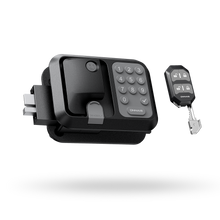
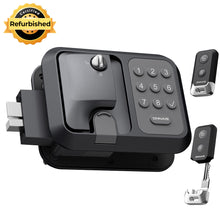
One option for upgrading RV entry access is a keyless lock. The ONNAIS Guard Smart RV Keyless Door Lock gives you four ways to unlock: app, keypad, remote key fob, or mechanical key. The Bluetooth app lets you check battery level, manage fobs, view operation history, share access with family, and create up to 10 one-time passwords for temporary access. It has an internal deadbolt, runs on four AA batteries, and has a weather-resistant exterior.
The lock requires a 3.75-inch-high by 2.75-inch-wide cutout and 1.25- to 1.5-inch door thickness. It's designed for right-hinged RV doors and is not compatible with Class A RVs, Class C two-pin door types, or left-hinged doors. It does not have remote internet connectivity or GPS tracking. Check the current product page for full specifications and measure your actual door before ordering.
A keyless lock is one tool in the access and security plan, not a replacement for campground selection, situational awareness, storage bay protection, or insurance. But it does make it easier to skip the key search when you're coming back to the RV tired and loaded down with gear.
Best RV Destination FAQs
What is the best RV destination in the USA?
There isn't one universal best. The best destination depends on when you can travel, what your rig can handle, what kind of scenery you want, and whether you prefer mountains, deserts, beaches, or national parks. Yellowstone in summer, Zion in spring, the Florida Keys in winter, and the Blue Ridge Parkway in fall are all excellent for different reasons.
What is the best season for an RV road trip?
The best season depends on where you want to go. Summer is mountain and high-country season, spring and fall are best for the Southwest and mid-elevation parks, and winter is for warm-weather escapes to the South and desert. Check the monthly calendar in this guide to match your available travel window with destinations that are open and comfortable.
Where can RVers go in winter?
RVers go to Florida, the Gulf Coast, southern Arizona, southern California deserts, South Texas, and southern New Mexico in winter for warm-weather escapes. The Everglades, Big Bend, Joshua Tree, and Tucson are all solid winter destinations. True winter camping in cold climates is possible with a heated rig and cold-weather experience, but most winter RV travel is snowbird season in the South.
How early should RV campgrounds be booked?
It depends on the destination and season. Summer national parks (Yellowstone, Glacier, Acadia) book out six months in advance the day reservations open. Spring break and holiday weeks in Florida and the Southwest book months ahead. Fall foliage campgrounds in Vermont and the Blue Ridge fill early for peak color weeks. Shoulder season and less-popular destinations may have availability a few weeks out. Check the campground's reservation page and book as early as the system allows if you have fixed travel dates.
Conclusion: Choose a Season, Then Verify the Fit
The best RV destinations in the USA are seasonal. Pick your travel month first, shortlist two or three destinations that are open and comfortable during that window, and verify the current road, campground, and weather conditions a week before departure.
Use the 20-destination seasonal index and monthly calendar to narrow your options, then open the relevant spoke or official page for the details. This index is a planning tool, not a live guarantee. Conditions change.
For broader RV travel planning, see our complete RV travel guide. For destination-specific campground recommendations, check out RV camping near Zion National Park, RV parks near Yellowstone, and beach RV camping. We're building out regional and national park spokes as the research is completed.
Choose your season, verify the fit, and go.