RV Travel Guide: Best Destinations, Road Trips and Planning Tips
Plan RV travel with destination ideas, seasonal advice, route checks, campground tips, budgets, and practical trip blueprints. Start planning today.

Quick answer: Good RV travel planning starts with four checks: where you can reasonably reach, when you are going, how many nights you have, and what your rig can safely handle. Pick the trip that fits those limits, verify the route with official sources, reserve the hardest campground first, and keep one backup day or route.
RV travel gets expensive and tiring when you choose the postcard first and work out the logistics later. A place can look perfect on a screen and still be a poor fit for your travel dates, your 35-foot setup, or the number of days you can get away.
This RV travel guide helps you sort that out before you burn fuel. You will find a trip selector, destination ideas, seasonal guidance, route and campground checks, a working budget formula, a pre-trip checklist, and three sample trip blueprints. Operational details change, so use the links in this guide and recheck roads, campgrounds, weather, and reservation rules before you leave.
Key Takeaways
- Choose a trip with four inputs: starting region, season, available nights, and rig profile.
- Measure total height and connected length before choosing a route or campsite.
- Reserve the least flexible campground first, then build the route around it.
- Plan fuel, food, water, waste, weather, and one safe backup before leaving home.
- Keep destination ideas in proportion to the trip. Two good base camps beat six rushed overnight stops.
Choose the Right RV Trip With Four Inputs
You do not need a complicated personality quiz to choose an RV trip. You need four pieces of information that affect every mile and every campground reservation.
| Input | Question to Answer | What It Changes |
|---|---|---|
| Starting region | How far can you reach without turning the trip into a delivery run? | Destination radius and transit nights |
| Travel season | What weather and road conditions can you and your RV handle? | Open roads, campground supply, crowds, system preparation |
| Available nights | How much time remains after the drive out and back? | Number of bases and reasonable daily mileage |
| Rig profile | What are your actual length, height, weight, tow setup, and hookup needs? | Route choice, site fit, fuel stops, and parking |
Answer these four questions before opening ten campground tabs. It saves time, and it helps you reject trips that look good but will not work this time around.
Input 1: Region and Starting Point
Start with your driveway, not the destination. Decide how many transit days you are willing to spend in each direction. Then set a one-way radius that leaves time to be somewhere instead of merely driving through it.
A three-night weekend usually works better within a few hours of home. A seven-night trip can support one major destination or two nearby bases. Two weeks gives you room for a longer route, but only if you resist changing campgrounds every night.
Count the return trip too. Sunday afternoon has a way of showing up whether you planned for it or not.
Input 2: Season and Weather Tolerance
Decide what kind of weather you are prepared to manage. Warm-weather travelers may head for Florida, the Gulf Coast, southern Arizona, or lower-elevation desert country in cooler months. Summer opens more high-country routes, but it also brings heat, crowds, wildfire smoke, and hard-to-get campsites in popular areas.
Shoulder season can be a fine bargain, but it is not a promise of mild weather. Mountain roads may still close, water systems may be shut down, and some campgrounds may run limited services. Check the managing agency, not an old blog post.
Input 3: Trip Length and Daily Driving Limit
Pick a daily driving range that accounts for slower acceleration, fuel stops, grades, construction, and setup. A car schedule usually does not survive contact with a loaded RV.
The 3-3-3 rule is one planning heuristic: drive no more than 300 miles, arrive by 3 p.m., and stay three nights. It is a starting point, not a law. A newer driver, a larger trailer, poor weather, or steep terrain may call for a shorter day. An experienced driver on flat interstate may be comfortable with more.
The better test is simple: can you arrive with enough daylight and patience left to back in, level, connect, eat, and notice if something is wrong?
Input 4: Rig Profile and Driver Comfort
Write down your RV height, total connected length, width, loaded weight, fuel range, and tow configuration. Include rooftop air conditioners, racks, mirrors, and anything hanging off the rear. Save the measurements in your phone and keep a paper copy in the cab.
Then be honest about the driver. A route may be legal for your rig and still be a bad choice if narrow lanes, long grades, or tight switchbacks make the person at the wheel miserable.
Use this quick selector:
| Your Trip Profile | Start With |
|---|---|
| 2-4 nights, new to RVing | A nearby private campground or state park with a pull-through option |
| 5-8 nights, one major destination | One base near a national park, beach, or scenic corridor |
| 9-14 nights, comfortable moving camp | Two or three bases with a rest day between long travel days |
| Large rig or limited mountain experience | Gateway-town camping and day trips in a smaller vehicle |
| No hookups and self-contained | Public land or dry camping after checking access, stay limits, water, and waste plans |
| Traveling with kids or pets | Shorter driving days, predictable stops, nearby services, and flexible activities |
Best RV Destinations in the USA by Region and Trip Style
The best RV destinations fit your route, campground needs, season, and actual setup. Scenery matters, but logistics decide whether you enjoy it.
Use this table as a first pass. The booking pressure and road notes are general planning signals, not live conditions. Verify each destination before you reserve.
| Destination | Best General Window | Useful Trip Length | Practical Rig Approach | Booking Pressure | Main Constraint |
|---|---|---|---|---|---|
| Zion National Park | Spring and fall | 4-6 nights | Measure first and choose the arrival side before booking | High in mild-weather months | Zion-Mount Carmel Highway limits and shuttle logistics |
| Yellowstone National Park | Late spring through early fall as roads open | 5-8 nights | Use one or two bases instead of towing the park loop each day | High for in-park sites | Seasonal roads, long internal drives, and service gaps |
| Glacier National Park | Summer into early fall | 4-7 nights | Leave larger rigs at a gateway base for restricted roads | High during full road access | Going-to-the-Sun Road restrictions and short season |
| Yosemite National Park | Late spring through fall, depending on elevation | 4-7 nights | Confirm campground category and total equipment length | Very high for in-park camping | Reservation supply, site fit, and seasonal access |
| Florida Panhandle and Gulf beaches | Fall through spring | 5-10 nights | Confirm whether the site is Gulf-front, bayfront, or only nearby | High for true waterfront sites | Storm planning, salt exposure, heat, and pet rules |
| Blue Ridge and Smoky Mountain corridor | Spring and fall | 5-10 nights | Base camp and scout tunnel or grade constraints before moving | Moderate to high during fall color | Low clearances, mountain weather, and weekend traffic |
| Southern Utah park circuit | Fall through spring | 7-14 nights | Use gateway towns and carry a strong water and fuel margin | High around school breaks | Heat, wind, long service gaps, and road restrictions |
| Pacific Northwest and Cascades | Summer into early fall | 7-14 nights | Plan mountain-pass alternates and avoid overlong transfer days | Moderate to high at signature parks | Wildfire smoke, pass weather, and seasonal facilities |
| Nearby state park or lake trip | Depends on region | 2-4 nights | Favor a pull-through or easy back-in for a first outing | Highest on weekends | Limited inventory near cities and holidays |
| Southern winter-sun route | Late fall through winter | 7-21 nights | Match hookup and battery needs to longer stays | High in snowbird areas | Cold fronts, holiday demand, and long-stay policies |
National Parks and Gateway Towns
National parks are natural RV road trip anchors, but the campground closest to the entrance is not always the best base.
Zion National Park is a good example. As of August 2026, the National Park Service has specific large-vehicle limits for the Zion-Mount Carmel Highway between Canyon Junction and the East Entrance. Those rules can change which side of the park you should approach from. Measure first and check the current NPS large-vehicle page before routing a large setup.
Yellowstone has five entrances and long driving distances inside the park. Choosing West Yellowstone, Gardiner, Cody, or another gateway affects fuel, groceries, road access, and how much of each day you spend behind the wheel. Check Yellowstone road conditions and seasonal dates before choosing an entrance.
Glacier and Yosemite reward the same habit: camp where the RV fits, then tour tight or restricted roads in a smaller vehicle or on park transit when available. Glacier publishes vehicle restrictions for Going-to-the-Sun Road, and Yosemite advises visitors to verify campground and vehicle details through its current campground information.
For a national park trip, compare these items before booking:
- Which entrance serves the sights you care about?
- Does the approach road fit your total setup?
- Is the campground limit for the RV alone or the RV plus tow vehicle?
- Can you leave the RV parked for day trips?
- Where will you buy fuel, groceries, propane, and repair parts?
- What road or campground closes first if weather turns?
Beach and Warm-Weather Camping
Beach RV camping in Florida and along the Gulf Coast works best when you define "on the beach" before paying a premium. It may mean a site on sand, a campground with a boardwalk, a bayfront property, or a park a short drive from the Gulf.
Check the actual site map and managing agency. Ask about hookups, site surface, drainage, pet rules, shade, and evacuation routes. Salt, humidity, blowing sand, and strong wind also change the maintenance routine. Rinse and inspect exposed hardware according to the component maker's instructions, keep awnings in when wind picks up, and review the rainy-season RV lock protection guide before a long coastal stay. Know where you will go if local officials issue an evacuation order.
The Atlantic hurricane season officially runs from June 1 through November 30, but a calendar does not make any travel day risk-free. Use the National Hurricane Center's current climatology and storm resources and local emergency management sources when a system develops.
Mountain, Desert, and Scenic-Drive Trips
Mountain and desert routes can be excellent RV country, but they punish vague planning.
For mountain travel, check grades, runaway truck ramps, tunnel clearances, brake condition, weather, and fuel spacing. A legal route is not automatically a comfortable route. If the driver is new to towing, a valley campground with day trips may be the better vacation.
For desert travel, heat and distance are the big ones. Know where you will find fuel, potable water, shade, and help. Do not assume cell service will cover the gap. Download maps, carry paper backups, and leave room in the schedule for wind or high-temperature delays.
Scenic drives such as the Blue Ridge Parkway may have low tunnels, temporary closures, or facility limits on certain segments. Check the road owner and current conditions for the exact section you plan to drive. A map app has never had to squeeze your roof air conditioner under a low bridge.
Beginner-Friendly and Family Trips
The best first RV camping trip is usually close enough to recover from a mistake.
Look for a campground with a pull-through or easy back-in site, a staffed office, fuel and groceries nearby, and enough activities that one rain day will not wreck the trip. Arrive in daylight. Practice leveling, hookups, slides, awnings, and the dump station before you need to do them with a line forming behind you.
Families traveling with children or pets should favor shorter drive days and planned stops. Keep temperature, medication, identification, restraints, campsite boundaries, and emergency contacts in the same written plan. The existing guide to RV travel safety with kids and pets covers that setup in more detail.
Seasonal and Holiday Trips
Winter RV travel splits into two very different trips. One group is chasing warmer weather. The other is deliberately camping in freezing conditions.
Warm-weather winter routes still need cold-front, wind, and storm planning. True winter camping requires an RV and systems prepared for freezing temperatures, along with a realistic plan for water, batteries, propane, traction, and emergency shelter. Work through the RV lock winterization guide before freezing weather reaches the door hardware.
Holiday trips also add crowd and closure pressure. Check event dates, campground operating status, and road conditions instead of relying on last year's schedule. For a seasonal starting point, see the guide to Christmas RV destinations.
When to Travel by RV: A Season-by-Season Guide
There is no single best time for an RV trip. The right season depends on elevation, latitude, weather tolerance, campground supply, and what your RV can handle.
| Season | Good Fits | Main Advantages | Main Problems to Plan For |
|---|---|---|---|
| Spring | Desert parks, lower elevations, Southern routes | Mild temperatures and fewer peak-summer crowds | Late snow, flooding, wind, limited mountain access |
| Summer | Northern parks, mountains, family travel | More campgrounds and high roads are open | Heat, crowds, wildfire smoke, thunderstorms |
| Fall | Scenic drives, desert transition, national parks | Cooler weather and lighter weekday demand | Early freezes, shorter daylight, seasonal closures |
| Winter | Gulf Coast, southern Arizona, planned snow trips | Warm-weather escapes or deliberate winter camping | Freezing systems, storms, holiday demand, closed facilities |
Shoulder season is often the sweet spot for cost and crowds, but it comes with more operational uncertainty. Campgrounds may have water shut off. Park shuttles may run reduced schedules. A road listed as "usually open" may be closed this morning.
Before a shoulder-season trip, verify:
- Campground opening and closing dates.
- Potable water and dump station status.
- Road, tunnel, ferry, and pass conditions.
- Overnight temperature at the campground elevation.
- Generator hours and battery-charging options.
- Nearby fuel and grocery hours.
For wind, thunderstorms, and severe weather, use local National Weather Service forecasts and alerts. The NWS wind-safety page says recreational vehicles and trailers are not safe shelter from strong winds and advises heading inside a sturdy building during high-wind warnings.
How to Plan an RV-Safe Route and Realistic Driving Days
An RV route planner should account for the vehicle you are driving as well as the address you typed in. Consumer map apps are useful for traffic and navigation, but they may not know your height, weight, propane restrictions, or comfort level on steep grades.
Use this process:
- Mark the anchor destination and campground.
- Enter your rig dimensions and weight into an RV-aware routing tool.
- Check important segments against state DOT, NPS, tunnel, ferry, and road-owner pages.
- Set daily mileage around daylight arrival and driver stamina.
- Mark fuel, food, water, dump, and rest stops.
- Save a backup route and one fallback campground.
- Recheck weather and closures the day before and the morning of travel.
Check Height, Length, Weight, Propane, and Grade Restrictions
Keep a rig data card in the cab:
| Measurement | Your Number |
|---|---|
| Maximum height, including rooftop equipment | ______ |
| Total connected length | ______ |
| RV or trailer length | ______ |
| Width, including mirrors | ______ |
| Loaded weight and axle limits | ______ |
| Fuel range with a safe reserve | ______ |
| Propane on board | Yes / No |
Do not round the height down. If the measurement is close to a posted clearance, stop and verify. Repaving, snow, lane position, and sagging equipment can shrink the margin you thought you had.
Also check how a campground defines length. "Up to 40 feet" may refer to the RV body, the parking pad, or the combined RV and tow vehicle. If the booking page is unclear, call.
Set a Daily Driving Range That Leaves Setup Time
A workable travel day includes more than moving time. Here is an example, not a rule:
| Time | Task |
|---|---|
| 8:00 a.m. | Final walk-around and departure |
| 10:00 a.m. | Fuel and tire walk-around |
| Noon | Lunch and driver break |
| 2:00 p.m. | Arrival area, fuel if needed |
| 3:00 p.m. | Campground check-in and setup |
That schedule may cover 150 miles on a slow mountain day or 250 miles on an easier highway day. Build the plan from terrain, weather, traffic, and the driver, not from a number somebody posted as universal advice.
Plan Fuel, Water, Dump, Food, and Connectivity Gaps
Remote routes need a service-gap plan. Mark the last dependable fuel stop before a long stretch. Do the same for groceries, propane, potable water, dump stations, repair shops, and cell coverage.
Do not plan to arrive on fumes. Headwinds, grades, detours, and generator use can all change consumption. If your route depends on one small station, confirm its hours and keep enough reserve to reach the next option.
Download maps and reservation details before losing service. Keep campground names, addresses, phone numbers, confirmation numbers, and gate instructions on paper as well.
Keep a Weather and Closure Backup Route
Set a trigger before the trip. For example:
- High-wind warning: delay, shorten the day, or stay put.
- Mountain pass closure: use the planned lower route, not an improvised shortcut.
- Campground evacuation or closure: move to the named fallback outside the affected area.
- Driver fatigue: stop at the safe overnight option you already marked.
The backup plan is not wasted effort. It is what keeps a routine delay from turning into a string of poor decisions.
Campgrounds, Reservations, and Campsite Fit
Where you stay changes the character of the trip as much as the destination does.
| Stay Type | Best For | Typical Strength | Main Tradeoff |
|---|---|---|---|
| Public campground | Parks, scenery, lower-service stays | Location and outdoor access | Fewer hookups, size limits, strict rules |
| Private RV park | Easy setup and resupply | Full hookups, laundry, staffed support | Higher cost and less seclusion |
| Membership or hosted stay | Overnight stops and route flexibility | Useful travel-night inventory | Membership rules and limited services vary |
| Dispersed camping | Self-contained travelers | Space and low fees where allowed | Access, waste, water, signal, and road condition |
Book the hardest piece first. For a national park trip, that may be the in-park or gateway campground. For a beach trip, it may be a small number of real waterfront sites. For a holiday trip, it may be the event weekend.
Reservation windows are not uniform. Some public campgrounds use rolling windows, some release dates in blocks, and some accept reservations through Recreation.gov or a state system. Private parks set their own policies. Read the cancellation rules before paying, especially during storm or wildfire seasons.
Check More Than the Advertised Site Length
Before booking, confirm:
- RV length and total connected length.
- Tow vehicle or towed vehicle parking.
- Site width with slides open.
- Tree, post, pedestal, and picnic-table clearance.
- Approach angle and internal campground turns.
- Surface and leveling needs.
- Electrical service and adapter needs.
- Water, sewer, dump station, and generator rules.
- Pet rules and after-hours arrival.
A 45-foot pad does not always fit a 35-foot fifth wheel and truck in a way the operator permits. Ask how they measure.
Build a Realistic RV Travel Budget
An RV travel budget works best as a formula, not a national average.
Trip cost = fuel + campgrounds + food above normal household spending + tolls + attractions + propane + maintenance reserve + rental or membership costs.
Fuel Formula
Use:
Trip miles / expected RV mpg x current fuel price = estimated fuel cost
For an illustrative 900-mile trip at 8 mpg and an assumed fuel price of $3.60 per gallon:
900 / 8 x $3.60 = $405
That is an example calculation, not a current national fuel forecast. Replace all three inputs with your route mileage, your loaded fuel economy, and the price you find along the route.
Worked Trip Budget
| Category | Example Assumption | Example Cost |
|---|---|---|
| Fuel | 900 miles, 8 mpg, $3.60/gallon | $405 |
| Campgrounds | 6 nights at an assumed $55 average | $330 |
| Food above normal spending | Groceries plus two meals out | $280 |
| Attractions | Park, tour, or museum costs | $120 |
| Tolls and propane | Route-specific allowance | $70 |
| Maintenance contingency | Set aside, not guaranteed spending | $150 |
| Illustrative total | Excludes RV payment and normal household food | $1,355 |
Use a range for uncertain costs. If campground rates run from $45 to $85 on your chosen dates, calculate both totals. That tells you what the trip can cost before a reservation screen starts rushing the decision.
Pre-Trip RV Travel Checklist: Systems, Documents, and Security
This RV travel checklist starts early enough to fix a problem instead of discovering it at the campground gate.
7 to 14 Days Before Departure
- Confirm campground dates, site type, arrival rules, and cancellation terms.
- Review the route with your saved rig dimensions.
- Inspect tires according to the tire and RV manufacturer's guidance, including the spare.
- Check brakes, lights, hitch or tow equipment, fluids, batteries, and visible leaks.
- Test the water, electrical, propane, heating, and cooling systems you expect to use.
- Check smoke, carbon monoxide, and propane alarms according to their manuals.
- Download offline maps and save road-owner and weather links.
- Refill prescriptions and prepare copies of medical and emergency contacts.
- Check locks, keys, fobs, keypad batteries, and emergency entry.
- Review the broader RV security guide for compartment, campsite, camera, and theft-prevention planning.
24 Hours Before Departure
- Recheck weather, wildfire, flood, road, ferry, and campground alerts.
- Confirm fuel stops and business hours on remote routes.
- Fill fresh water only to the level the trip requires. Water weight adds up quickly.
- Charge phones, radios, power banks, and navigation devices.
- Store heavy items low and secure anything that can move.
- Put campground confirmations, insurance information, registration, and roadside contacts where the driver can reach them.
- Tell a trusted person the route and expected check-in time for remote travel.
Final Walk-Around
- Disconnect power, water, and sewer.
- Retract slides, steps, stabilizers, jacks, and awnings.
- Close roof vents and windows as conditions require.
- Lock compartments and the entry door.
- Check hitch connection, safety chains, breakaway cable, and electrical plug.
- Verify lights and tire appearance.
- Remove chocks and leveling gear only in the correct order for your setup.
- Walk around once more. The second lap is cheap.
Optional Shared Access for Campground Days
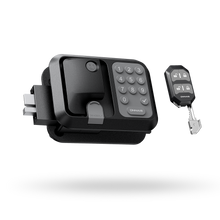
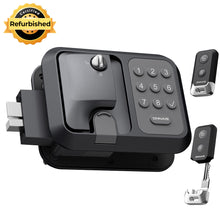
When several adults split up for a hike or grocery run, passing one key around gets old. A compatible ONNAIS Guard Smart RV keyless door lock provides Bluetooth app, keypad, remote fob, and mechanical-key access. The app can check battery status, manage fobs, share access, review operation history, and create up to 10 one-time passwords. It uses local Bluetooth, so do not assume cellular control from miles away. Carry the mechanical backup key outside the RV and check the four AA batteries before a long trip.
Measure first with the RV door lock size guide. Guard Smart requires a 3.75-inch-high by 2.75-inch-wide cutout and 1.25 to 1.5-inch door thickness. It is not intended for Class A RVs, Class C two-pin doors, or left-hinged doors. Its exterior is weather-resistant, not rated for submersion.
Three Worked RV Trip Blueprints
These are planning patterns, not guaranteed schedules. Replace the mileage, stops, weather checks, and reservation timing with your starting point and rig.
Three-Night Regional Trip
| Item | Plan |
|---|---|
| Best for | New RVers, families, system shakedowns |
| Destination radius | Roughly 75-150 miles from home, adjusted for terrain |
| Transit-to-destination ratio | One travel afternoon, two full destination days, one return drive |
| Overnight strategy | One campground for all three nights |
| Reservation priority | Secure the weekend campsite first |
| Main rig constraint | Site approach, hookups, and beginner-friendly backing |
| Service gap | Keep fuel, groceries, and repair help within a reasonable drive |
| Backup | A second nearby campground or an early return option |
Use this trip to test systems and routines. Do not cram in three attractions a day. If setup takes longer than expected, you still have a trip instead of a schedule failure.
Seven-Night National Park Trip
| Item | Plan |
|---|---|
| Best for | One major park or two adjoining areas |
| Daily mileage band | About 150-250 miles on transit days, reduced for mountains or weather |
| Transit-to-destination ratio | Two transit nights, four base nights, one buffer or return night |
| Overnight strategy | One main gateway base plus staging nights if needed |
| Reservation priority | Main campground before tours or dining |
| Main rig constraint | Entrance route, combined length, and internal park parking |
| Service gap | Fuel and groceries before entering remote park country |
| Backup | Alternate entrance, gateway campground, or lower-elevation route |
Park the RV for sightseeing when that makes sense. Moving a full setup every morning is rarely the part people remember fondly.
Fourteen-Night Two-Region Route
| Item | Plan |
|---|---|
| Best for | Experienced travelers who want two distinct regions |
| Daily mileage band | Mostly 175-250 miles on travel days with shorter repositioning days |
| Transit-to-destination ratio | Four travel nights, eight destination nights, two buffer/rest nights |
| Overnight strategy | Two main bases plus simple transit stops |
| Reservation priority | Scarce destination campsites, then flexible travel nights |
| Main rig constraint | Fuel range, elevation changes, and campground fit at both bases |
| Service gap | Schedule laundry, groceries, propane, dump, and maintenance between regions |
| Backup | Drop the second region and extend the first if weather or repairs take a day |
The buffer days are the point. They let you wait out wind, handle a repair, or stay longer somewhere that deserves it without driving late to catch up.
Frequently Asked Questions About RV Travel
How far should you drive an RV in one day?
Drive only as far as you can safely cover while leaving time for fuel, breaks, delays, and daylight setup. A practical starting range is 200 to 300 miles, but terrain, weather, traffic, rig size, and driver experience may call for less.
How early should you reserve RV campgrounds?
Reserve the hardest-to-get campground as soon as its official booking window opens. Popular national parks, waterfront sites, holidays, and weekends usually need earlier action than flexible private parks or midweek stops. Check each campground's current system and cancellation rules.
Can Google Maps plan an RV-safe route?
Google Maps can help with navigation and traffic, but it does not reliably account for every RV height, weight, length, propane, grade, or campground-access restriction. Use an RV-aware routing tool and verify critical segments with the road owner or agency.
What should first-time RV travelers avoid?
Avoid overlong driving days, late arrivals, unmeasured campsites, untested systems, and schedules with no backup. Start close to home, arrive in daylight, practice the setup, and keep the first trip simple enough that a small mistake stays small.
Choose One Route and Verify the Details
A useful RV travel guide should help you rule out bad-fit trips before you add destinations to a list. Choose your region, season, available nights, and rig profile. Then verify the route, reserve the hardest campground, mark service gaps, and write down the backup.
Use the planned RV road trip guide to build the route when that spoke is available, or compare the planned best RV road trips in the USA guide for destination ideas. For the entry hardware and fit checks behind the security section, use the complete RV door lock guide. Before departure, check the official road, campground, and weather sources one more time. That final check is usually faster than fixing a bad assumption from the shoulder of the road.