RV Parks on the Beach: Best Florida and Gulf Coast Campgrounds
Compare RV parks on the beach across Florida and the Gulf Coast by access, hookups, rig size, season and storm planning. Choose your stop.

Quick answer: The best RV parks on the beach depend on what you mean by "on." Camping on the Gulf has a small group of RV sites directly on the sand. Gulf Waters has full-hookup resort sites and a boardwalk to the Gulf. Fort Pickens offers public-park camping with beach access, while Padre Island adds developed and primitive choices. This guide labels the real access before it calls anything beachfront.
One site may put your tires on sand. Another faces Santa Rosa Sound, sits beside a bay, or requires a bike ride to the beach. The 12 campgrounds below are grouped by access, utilities, rig-fit evidence, operating status, and trip style. Read the exact reservable site record before paying.
What Counts as RV Parks on the Beach?
For this guide, RV parks on the beach are campgrounds where a specific RV site is on the sand or Gulf shoreline, or where the campground property provides its own direct route to the beach. Direct beach access can be a boardwalk or trail even when the RV pad is not on sand. Searchers often use "RV campgrounds on the beach" and "RV parks near the beach" as though they mean the same thing. This guide does not. Bayfront, sound-front, and short-drive choices get different labels.
| Access Class | What It Means | What to Verify Before Booking |
|---|---|---|
| A | The RV site is directly on sand or the immediate Gulf shoreline | Whether the exact site has sewer, permits pets, and can take your full connected length |
| B | The campground property has a dedicated beach, boardwalk, or trail to Gulf sand | Walking distance, dune or road crossings, gate hours, and accessibility |
| C | The site or campground faces a bay, inlet, or sound, with a Gulf beach nearby | Whether swimming access is on the property and how you reach the Gulf side |
| D | The campground is a short drive or bike ride from the beach | Parking, day-use fees, bike-route practicality, and whether moving the RV is necessary |
The class applies to the site type, not just the property name. Camping on the Gulf has 16 Class A sites, while rows farther back differ. Galveston Island State Park sells separate beachside and bayside categories. Book the category, not the adjective. A Class D park with a measured 65-foot pull-through may still fit a large motorhome better than a Class A sand site with no sewer.
Best Beach RV Camping at a Glance
This comparison uses the most specific current record available. "Live quote" means the public page did not provide a stable nightly figure that could be used responsibly. "Varies" means the booking system assigns limits or utilities by individual site.
| Campground | State | Class | Frontage | Type | Hookups | Largest Verified Site | Pet/Beach Note | Rate Sample, Aug. 9, 2026 | Best General Window | Reserve | Official Source |
|---|---|---|---|---|---|---|---|---|---|---|---|
| Camping on the Gulf | FL | A for 16 sites | Gulf sand | Private | Direct: water/electric, no sewer; farther back: full | Varies | No pets on direct sites | Live quote | Fall-spring | Sand category first | Site types |
| Pensacola Beach RV Resort | FL | C | Direct Sound access; Gulf beach nearby | Private | Full, 30/50 amp | Varies | Verify both resort and beach | Standard 2026 daily RV rates: $80-$145; subject to change | Fall-spring | By tier and season | Resort and rates |
| Fort Pickens | FL | B | Gulf and sound access | Federal | Water plus 20/30/50-amp electric; dump | Varies | Pets off NPS beaches | Live quote plus entrance | Fall-spring | Exact loop/site | Recreation.gov |
| Grayton Beach | FL | B | Gulf via park | State | Live inventory | Varies | Verify current rules | Live quote | Fall-spring | Exact site record | Destination page |
| Fort De Soto | FL | C | Bay/inlet; Gulf elsewhere | County | Varies | Varies | Loop rules vary | Live quote | Fall-spring | Check closures, then exact loop/site | Pinellas County |
| Ho-Hum | FL | B | Waterfront rows | Private | Full, 20/30/50 amp | Varies | Verify local beach rules | Tier A: $63-$100+ | Fall-spring | Choose row first | RV sites |
| Gulf State Park | AL | D | Beach 1.5 miles away | State | 496 full-hookup sites | About 65-foot pull-through | Verify current rules | Live quote | Fall-spring | Exact site | Campground |
| Buccaneer State Park | MS | C | Limited Gulf-view overflow | State | 206 premium; 70 overflow water/electric; dump | Varies | Verify current rules | Live quote | Fall-spring | Confirm overflow status | Coastal Mississippi |
| Grand Isle State Park | LA | B | Beachside park | State | 49 water/electric RV sites | Varies | Verify current rules | Live quote | Spring/fall | Recheck island alerts | Camping details and town directory |
| Galveston Island State Park | TX | B, beachside | Gulf via park | State | Water plus 20/30/50-amp electric | Varies | Park rules apply | $30 or $35 plus entrance | Fall/spring | Select beachside | TPWD |
| Gulf Waters | TX | B | Gulf boardwalk | Private | Full, 30/50 amp | Full-size concrete pads | Up to 3 dogs under resort policy; verify beach rules | From $88 by tier | Fall-spring | Confirm lot/tier | Resort, rates, and policies |
| Malaquite/South Beach | TX | B/A | Gulf beach | Federal | None; dump/fill near Malaquite | Live-condition dependent | Follow NPS rules | Current federal fees | Late fall-early spring | Check conditions first | NPS |
Fast picks:
- True sand-front site: Camping on the Gulf.
- Full hookups and a beach boardwalk: Gulf Waters.
- Measured large-rig site: Gulf State Park.
- Public-park base: Fort Pickens, Galveston, or Grand Isle.
- Primitive shoreline camping: Padre Island, only when the setup and current conditions agree.
Best Florida Beach RV Parks
Florida has the largest concentration of well-known beachfront RV parks in this comparison, but its shoreline labels are especially slippery. The six choices below solve different problems. Only one has a verified group of sites parked directly on open sand.
Camping on the Gulf, Miramar Beach
Access class: A for 16 direct beachfront sites. Best for: the clearest park-on-the-sand experience in this list. Main tradeoff: the best-located sites give up sewer and do not allow pets.
The official site-type page says the property has 215 sites and 16 directly beachfront spaces where the rig parks on sand. Those 16 have water and electric but no sewer, and pets are not permitted. Other beach rows offer full hookups and allow pets under park policy. Decide whether Class A access is worth the utility and pet tradeoff, then check live inventory for exact dimensions.
Pensacola Beach RV Resort, Pensacola Beach
Access class: C. Best for: full hookups and resort convenience on the island. Main tradeoff: the operator lists direct Sound access and convenient beach access, not an RV pad on Gulf sand.
Pensacola Beach RV Resort lists direct Sound access, convenient beach access, full-hookup sites, 30/50-amp service, and space for large rigs. "Large" is not a measurement, so ask for the assigned-site length, width, approach, and parking arrangement.
The resort's current 2026 rate table shows standard RV daily rates from $80 to $145 by site tier and season. The page says rates can change and lists separate holiday pricing. This is a Class C choice for travelers who want utilities and easy island access, not a substitute for an RV site on Gulf sand.
Fort Pickens Campground, Gulf Islands National Seashore
Access class: B. Best for: a public barrier-island stay with park beaches and basic RV utilities. Main tradeoff: weather and road conditions can affect access, and pets cannot use national seashore beaches.
The current Fort Pickens listing lists 137 family sites with water plus 20, 30, or 50-amp electric, 40 non-electric tent sites, showers, drinking water, and a dump station. Generators are allowed only in Loop D during stated hours. Read the exact site record for equipment limits. Pets are not allowed on national seashore beaches, and the NPS conditions page carries current access and closure notices.
Grayton Beach State Park
Access class: B. Best for: state-park camping with Gulf beach and coastal-dune-lake access. Main tradeoff: utilities and rig dimensions must be confirmed in the exact live reservation record.
The current Visit Florida destination page confirms tent and RV camping, restrooms, showers, cabins, and beach access. The campground is inside the park rather than on open sand. Confirm rig length, utilities, surface, parking, and the route to the beach in the live site record. Do not assume full hookups unless the reservable site says so.
Fort De Soto Park Campground
Access class: C. Best for: county-park camping with broad waterfront access and room to explore by bike. Main tradeoff: a waterfront campsite may face bay or inlet water, while the Gulf beaches sit elsewhere in the larger park.
Pinellas County describes Fort De Soto as a 236-site family campground in a park with over seven miles of waterfront and almost three miles of beach. A seven-mile paved trail connects the camping area, North Beach, East Beach, and the boat ramp. As of August 9, 2026, the county page says East Loop and portions of the seawall remain closed after storm damage. Check that notice before choosing a loop.
Ho-Hum RV Park, Carrabelle
Access class: B. Best for: a small waterfront park with full hookups and close-to-water rows. Main tradeoff: the shoreline experience is not the same as parking on a broad swimming beach.
Ho-Hum's RV site page says every site includes water, sewer, and 20/30/50-amp electric. It offers pull-throughs and back-ins in three rows. Tier A sits a few feet from the water, Tier B is one row back, and Tier C is within a few hundred feet. Tier A rates are listed from $63 to $100+. Confirm the assigned pad and shoreline before treating that dated sample as a quote.
Current closure note: Dr. Julian G. Bruce St. George Island State Park is not ranked here. A current park-support notice says its campground closed to overnight guests on July 6, 2026, for approximately one year during renovation. Recheck for an official reopening before putting it back into a bookable list.
Best Gulf Coast RV Parks Beyond Florida
The Gulf Coast does not stop at the Florida line, and neither should the shortlist. Alabama is useful for large full-hookup inventory, Mississippi and Louisiana add shoreline bases, and Texas offers everything from state-park electric sites to primitive camping on the sand.
Gulf State Park Campground, Alabama
Access class: D. Best for: larger rigs, full hookups, and public-park facilities. Main tradeoff: the campground is about 1.5 miles from the beach.
Gulf State Park is the deliberate Class D exception. The official campground page lists 496 full-hookup campsites with paved pads, about 45 feet for most back-ins and 65 feet for most pull-throughs. Choose it when measured fit and sewer matter more than immediate sand access. Confirm the complete setup and extra-vehicle space for the exact site.
Buccaneer State Park, Mississippi
Access class: C. Best for: a Mississippi Gulf Coast stop with multiple camping categories. Main tradeoff: only limited overflow inventory is described as overlooking the Gulf.
The current Coastal Mississippi park listing records 206 premium campsites, a central dump, and 70 overflow sites with water and electric. It says the overflow section overlooks the Gulf and opens on a limited basis. Confirm the operating category, frontage, hookups, and assigned-site length. The source does not support calling every site beachfront.
Grand Isle State Park, Louisiana
Access class: B. Best for: a beachside public-park stop on Louisiana's barrier island. Main tradeoff: island and storm-related conditions deserve a fresh check close to departure.
The Town of Grand Isle's current camping page lists 49 premium campsites with water and electric plus 14 beach tent sites. A separate town campground directory labels the state park as beachside, but neither page says RVs occupy the tent area. Use Class B, reserve the exact premium site, and recheck park operations, weather, local alerts, and cancellation terms before leaving the mainland.
Galveston Island State Park, Texas
Access class: B for beachside sites. Best for: a public Texas beach base with electric service. Main tradeoff: bayside sites are a different product and sit 1.5 miles from the beach.
Texas Parks and Wildlife separates beachside and bayside campsite categories. Beachside listings include water and 20/30/50-amp electric at $30 or $35 per night, plus the entrance fee. Bayside electric sites are 1.5 miles from the beach. Dimensions and parking vary by reservable record, and the beachside descriptions do not list sewer at the site.
Gulf Waters RV Resort, Port Aransas, Texas
Access class: B. Best for: a full-hookup concrete pad with a dedicated boardwalk to the beach. Main tradeoff: rates and lot features vary by tier, and some lots are restricted to motorcoaches.
Gulf Waters' home page advertises a beach boardwalk and four classes of full-size concrete pads. Its rate page lists water, sewer, 30/50-amp electric, cable, and Wi-Fi. This is beach camping with hookups, not an RV parked on open sand. Starting nightly prices ran from $88 to $116 by tier on August 9, 2026. Confirm the privately owned lot, usable pad, total price, and any motorcoach-only rule.
Malaquite Campground and South Beach, Padre Island National Seashore
Access class: B at Malaquite and A for primitive South Beach camping. Best for: self-contained campers who understand the difference between a developed campground and driving onto sand. Main tradeoff: there are no water or electric hookups anywhere in the park.
The NPS camping guide says Malaquite is a short walk from the beach, with a dump and freshwater fill near the entrance. A self-issued permit and fee are required, and camping is not allowed on Malaquite Beach itself. South Beach is primitive shoreline camping without a camping permit, although entrance fees apply. Cell service is very limited. Check conditions, tides, closures, and vehicle capability before driving any RV onto sand.
Which Beach Campground Fits Your RV and Trip Style?
The best choice is the one that survives four questions: Does the site fit the complete rig? Does it have the utilities you need? Is the shoreline what you expected? Can you handle the current weather and evacuation plan?
| Trip Need | Start With | Why | Important Tradeoff |
|---|---|---|---|
| True sand-front RV site | Camping on the Gulf, direct beachfront category | Sixteen verified sites put the RV on sand | No sewer and no pets in that category |
| Full hookups plus direct beach route | Gulf Waters | Full hookups, concrete pads, and a dedicated boardwalk | Private-resort pricing and site-tier variation |
| Full hookups on Pensacola Beach | Pensacola Beach RV Resort | Sound-front private beach and Gulf access nearby | Class C, not direct Gulf-sand camping |
| Large measured site | Gulf State Park pull-through inventory | Most pull-through pads are described as about 65 feet | Class D and about 1.5 miles from the beach |
| Public-park value | Fort Pickens, Galveston, or Grand Isle | Public management and clear camping categories | Utilities, pet rules, and site fit vary |
| Primitive beach camping | South Beach at Padre Island | Actual shoreline camping for a capable, self-contained setup | No hookups, limited cell service, and sand-driving risk |
| Pet trip | Start with Ho-Hum or Gulf Waters, then verify | Both publish pet-friendly resort information | Campground permission does not equal beach permission |
For any park that calls itself big-rig friendly, ask for a number. Measure the motorhome or the connected truck and trailer, then add rear racks, spare tires, and anything else that consumes the site. Also ask whether the stated maximum includes the tow vehicle. A 40-foot pad does not magically become 58 feet because the brochure used a cheerful adjective.
Pet travel needs two checks. First, can the animal stay in the campground? Second, can it use the adjacent beach, boardwalk, shuttle, or public access? Fort Pickens, for example, allows camping with conditions but states that pets are not allowed on national seashore beaches. Use the RV safety guide for families with kids and pets for the rest of the arrival routine.
Best Time for Gulf Coast Beach RV Camping
There is no storm-proof month. The best time is the window that balances comfortable outdoor hours, campground demand, school breaks, cold fronts, heat, insects, and your willingness to change plans.
| Region | Practical Starting Window | What Usually Drives the Decision | Booking Pressure to Expect |
|---|---|---|---|
| Florida Panhandle | Fall through spring | Milder days, occasional cold fronts, and lower summer heat load | High around spring break, holidays, and scarce sand-front sites |
| West and central Florida Gulf Coast | Late fall through spring | Snowbird demand versus warmer, drier camping weather | High for winter monthly stays and waterfront inventory |
| Alabama, Mississippi, and Louisiana | Fall, winter, and spring | Cold fronts, humidity, storm exposure, and event weekends | Mixed, but special events and limited Gulf-view categories can fill |
| Upper Texas coast | Fall and spring, with winter checks | Wind, fronts, humidity, and weekend traffic from large cities | High on mild weekends and holidays |
| South Texas coast | Late fall through early spring | Winter demand versus summer heat and tropical-weather exposure | High for snowbird stays and preferred resort lots |
The National Hurricane Center defines the Atlantic hurricane season as June 1 through November 30 and notes that tropical cyclones can occur outside those dates. A seasonal table cannot clear a trip. Current watches, warnings, park closures, storm-surge zones, and local evacuation orders take priority.
Wind matters even when no named storm is present. National Weather Service guidance says RVs and trailers are not safe shelter from strong winds, and high wind can overturn one while parked or moving. If strong wind is forecast, identify a sturdy building or leave the exposed area early. Pulling the awning in is good housekeeping. It is not a severe-weather plan.
For ordinary trip planning, compare dates rather than chasing one perfect month. A cool March week can be comfortable and crowded. An October reservation can be pleasant and still require a tropical-weather backup. Keep a cancellable inland option, know the last day you can change plans, and check the forecast again before the refund window closes.
Booking, Route and Budget Planning
Beach campground planning works backward from the hardest reservation. A common mistake is booking easy private-resort nights first, then discovering that the one direct-sand or public-park stay is unavailable in the middle.
Five to Seven Days in the Florida Panhandle
Use two bases instead of moving every morning. One base can cover Pensacola Beach and Fort Pickens, subject to current island access. A second can cover Miramar Beach or Grayton Beach. Decide whether the trip's priority is the 16-site sand-front category at Camping on the Gulf, the public-park setting at Grayton, or full hookups on Santa Rosa Sound.
Book the scarce category first. Then place the flexible nights around it. This route is short enough to leave the RV set up for more than one night, which is usually the whole point of bringing a house on wheels.
Fourteen to Twenty-One Days Across the Gulf Coast
A workable westbound sequence is Gulf Shores, the Mississippi coast, Grand Isle, Galveston, Port Aransas, and Padre Island. It is a sequence, not a daily driving order. Break transfers where driver hours, fuel range, weather, and the rig's comfort level require.
Reserve Grand Isle and public-park inventory before filling flexible resort nights. Treat South Beach primitive camping as conditional until the NPS condition report, tides, and vehicle capability agree. Keep at least one inland or developed-campground backup during tropical-weather season.
Booking Checklist
- Measure the complete connected rig, height, and rear attachments.
- Choose the required utility level: electric only, water/electric, full hookups, or self-contained.
- Reserve true sand-front sites and limited Gulf-view categories first.
- Reserve public parks next because their site types and inventory can be tight.
- Add flexible private-resort nights around the fixed reservations.
- Read cancellation, storm, early-departure, deposit, tax, and resort-fee terms.
- Recheck the assigned site's length, surface, drainage, parking, and pet rules.
- Save current campground, road, weather, and evacuation pages for departure day.
Build the budget from more than the nightly rate. Include campsite taxes and booking fees, fuel, tolls, parking or entrance fees, laundry, propane, pet charges, cancellation exposure, and an inland backup stay. A $35 public campsite may still require an entrance fee. A quoted private rate may rise with taxes, event weekends, minimum stays, or site tier.
Beach-Camping Arrival, Security and Salt-Air Checklist
Coastal camping adds salt, sand, wind, water, and fast-changing weather to the normal setup. Salt-air corrosion also makes the maker's cleaning instructions more important. Handle those jobs first. The view will still be there after the chocks are in.
Before Arrival
- Ask how the assigned pad drains and whether a lower site floods during heavy rain or unusually high water.
- Save the campground office, local emergency management, and evacuation-route information offline.
- Check current tropical-weather, wind, tide, road, and park alerts.
- Confirm the exact site, utilities, arrival window, gate procedure, pet rule, and beach access.
- Measure the door cutout and thickness before buying any replacement RV lock.
At Camp
- Chock and level the RV on the actual surface. Sand beside a pad is not a leveling block.
- Retract awnings and loose shade gear before wind builds, not after the first arm starts jumping.
- Keep valuables out of sight and store keys, fobs, and backup entry tools in separate places.
- Keep sand out of keyways, seals, steps, and moving hardware. Follow each component maker's cleaning instructions.
- Check lock and device battery levels before the group splits up for the beach.
- Review the RV campground security checklist and the wet-weather RV lock care guide before a long coastal stay.
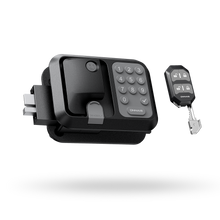
When the family splits up for beach time, a keyless lock can spare the usual shared-key handoff. Guard Smart supports the ONNAIS Bluetooth app, a keypad, a remote fob, and a mechanical key. Measure before buying: it needs a 3.75 x 2.75-inch opening and a door 1.25 to 1.5 inches thick. It does not fit Class A RVs, Class C two-pin doors, or left-hinged doors. The Guard Smart RV keyless door lock is weather-resistant, not fully waterproof.
Before Departure
- Remove sand and salt residue according to the RV and component manufacturers' instructions. Do not soak a lock or electrical part.
- Inspect exposed fasteners, seals, steps, jacks, hitch parts, and electrical covers.
- Confirm the next route and fuel stop before pulling out of a low-signal area.
- Empty waste and refill freshwater only at approved facilities.
- Walk the whole site for chocks, cords, pet gear, leveling blocks, and awning hardware.
If a watch or warning is issued, use official instructions. Ready.gov advises travelers to know their evacuation zone and routes, follow local emergency managers, and leave when ordered. An RV is replaceable. The people and pets in it are not.
Common Beach RV Camping Mistakes
- Trusting the word "beachfront." Check whether the site is Class A, B, C, or D and look at the exact site map.
- Booking before measuring. Match the complete connected length, width, height, and parking need to the assigned site, not a campground-wide maximum RV length.
- Assuming sand-front means full hookups. Camping on the Gulf's direct sites are the prime example: water and electric, but no sewer.
- Treating a pet-friendly campground as a pet-friendly beach. Verify the campground, boardwalk, public beach, and park rules separately.
- Leaving the awning out because the sky looks clear. Coastal wind can arrive before rain. Retract loose gear early and use a sturdy shelter plan for strong wind.
- Learning the evacuation route after an order. Save the zone, route, inland destination, fuel plan, and local alert source before setup.
Frequently Asked Questions
Are there RV parks directly on the sand in Florida?
Yes. Camping on the Gulf says 16 of its 215 sites are directly beachfront and place the RV on sand. Those sites have water and electric but no sewer, and pets are not allowed in that category. Reserve the exact site type because rows farther back have different access and utilities.
Can you park an RV overnight on a Florida beach?
Only where the land manager or campground specifically allows it. Florida beaches include state, county, municipal, federal, and private property with different rules. A public beach parking lot is not an automatic overnight campsite. Use a legal campground or obtain current permission from the responsible authority.
Which Gulf Coast beach RV parks have full hookups?
Several do, but their beach access differs. Gulf Waters has full hookups and a boardwalk to the Gulf. Pensacola Beach RV Resort has full hookups on Santa Rosa Sound. Ho-Hum has full hookups at waterfront rows. Gulf State Park also has full hookups, but the campground is about 1.5 miles from the beach.
What is the best month for Gulf Coast RV camping?
March, April, October, and November are useful starting points, not guarantees. Regional cold fronts, heat, school breaks, snowbird demand, and tropical weather can change the answer. Check the exact coast and year. The Atlantic hurricane season runs June 1 through November 30, but storms can occur outside it.
Can big rigs fit at beachfront RV parks?
Some can, but the assigned site's measurements control. Gulf State Park publishes approximate 65-foot pull-through pads, while many waterfront parks say dimensions vary. Measure the complete setup and ask about approach angle, tow-vehicle parking, slides, rear racks, and any motorcoach-only site restrictions.
Are dogs allowed at beach RV campgrounds?
Often in the campground, but not always on the beach. Camping on the Gulf excludes pets from its direct beachfront category, and Fort Pickens states that pets cannot use national seashore beaches. Check the campground, trail, boardwalk, and public-beach rules separately before bringing the dog.
What should RVers do if a hurricane watch is issued?
Start the official plan immediately. Monitor the National Hurricane Center and local emergency management, confirm your evacuation zone and route, fuel the tow vehicle or motorhome, and move early if officials advise it. Do not use an RV or trailer as shelter from strong wind, storm surge, or flooding.
Choose by Access, Fit and Season
The best RV parks on the beach are not necessarily the ones with "beachfront" in the name. Choose the specific site whose access class, measured fit, utilities, pet rules, and weather plan match your rig. Then recheck the campground source, current alerts, and cancellation terms before booking and again before departure. That last ten-minute check can save a very long tow to a closed gate.