RV Parks Near Yellowstone National Park: Size Limits and Best Routes
Compare RV parks near Yellowstone National Park by entrance, rig length, hookups, 2026 dates, road access, and resupply options. Plan your route.

Quick answer: The best RV parks near Yellowstone National Park depend on combined rig length, hookup needs, the park zone you want to visit, and the entrance roads that are open. Fishing Bridge is the only in-park campground with full hookups. Madison and Bridge Bay accept longer RV-plus-vehicle combinations than Canyon, while gateway bases can make resupply easier and keep the RV parked during sightseeing days.
RV camping in Yellowstone rewards people who measure first and reserve second. A 25-foot trailer is not a 25-foot setup once the tow vehicle is connected. A campground can also accept your total length while the route to it has a construction restriction or seasonal closure.
This guide compares the 2026 in-park campgrounds, explains how Yellowstone counts equipment length, sorts outside bases by entrance, and builds three route patterns that reduce cross-park towing.
RV Camping Near Yellowstone: The Short Answer
You can stay inside Yellowstone or use a gateway base at West Yellowstone, Gardiner, Cody, Island Park, Cooke City, or the Grand Teton side. The right choice is not always the closest pin on a map.
-
Measure the connected setup. Yellowstone's official table uses
RV + Vehicle max length, not RV body length alone. - Match the base to the park zone. West works well for geyser-basin trips, Gardiner for Mammoth and the north, and a south base for a combined Grand Teton route.
- Verify the road before the reservation becomes a route. Most Yellowstone roads are seasonal, and current construction can add delays or block oversized vehicles.
Pick a Yellowstone RV Base in 60 Seconds
Yellowstone RV parks and campgrounds solve different problems. Start with the hardest requirement, then check the warning column.
| Trip Need | Practical Starting Point | Why It Works | Do Not Choose Until You Check |
|---|---|---|---|
| Full hookups inside the park | Fishing Bridge RV Park | Water, sewer, and 50-amp electric at the site | Hard-sided restriction, exact combined-length category, and live availability |
| Central sightseeing without hookups | Canyon or Madison | Useful access to central or west-side park zones | Canyon's 40-foot RV-plus-vehicle cap; both require a dry-camping plan |
| North-side wildlife and Mammoth | Gardiner | North Entrance access and a practical town base | Gardner River High Bridge limits and campground-specific site fit |
| West-side convenience | West Yellowstone or Island Park | Geyser-side approach plus private full-hookup choices | Exact site length, town traffic, and the longer Island Park approach |
| East-side arrival from Cody | Cody staging night or an east-side booking | Fits a directional trip arriving from Wyoming | Sylvan Pass road status and the long drive to many west-side sights |
| Yellowstone plus Grand Teton | Colter Bay or another south-side base | Keeps the Grand Teton portion close and supports a northbound move | South Entrance season, 45-foot Colter Bay limit, and the distance to northern Yellowstone |
There is no universal winner. A large motorhome needing sewer may accept a longer drive from a private park. A smaller trailer may gain more by staying at Madison and leaving the tow vehicle ready for day trips.
Calculate Yellowstone RV Size Limits for Your Reservation
Yellowstone RV size limits begin with the complete equipment you bring. The NPS campground table labels its limit RV + Vehicle max length. Yellowstone National Park Lodges also requires the combined length when it matches campers to reservation categories.
Fill this out before opening the booking page:
| Measurement | Your Number | Include |
|---|---|---|
| Motorhome body or trailer length | ______ | Bumpers and permanent bodywork |
| Tow vehicle or towed vehicle | ______ | Full vehicle length |
| Connected end-to-end length | ______ | Actual setup from front-most to rear-most point |
| Rear attachments | ______ | Bike rack, cargo tray, spare tire, or box |
| Maximum height | ______ | Air conditioner, antenna, rack, and vent covers |
| Maximum width | ______ | Mirrors and fixed attachments; slides are a separate site-clearance check |
| Slide clearance needed | ______ | Both sides, including awning and steps |
| Extra vehicle | ______ | Ask whether it must fit the same site |
The Lodges camping page says guests must enter dimensions for the RV, trailer, tow vehicle, and other towed vehicles. It warns that equipment different from the reservation may not be accommodated. Sites are assigned at check-in, specific site numbers are not guaranteed, and categories for combinations of 40 feet or more are limited.
Reservation warning: A campground-wide maximum is not a promise that every site takes that length. Book the exact category for the equipment that will arrive.
Motorhome Plus Towed Vehicle Example
A 32-foot motorhome tows a 16-foot car, and the actual connected measurement is 51 feet after the tow equipment and rear rack are included. That setup does not fit a 40-foot category. At Fishing Bridge, it would need a category whose published combined cap covers 51 feet, and availability still controls. Do not detach in the check-in lane and pretend the second vehicle disappeared.
Travel Trailer Plus Tow Vehicle Example
A trailer marketed as 25 feet may be longer when measured to the tongue and rear rack. Suppose the truck-and-trailer setup measures 44 feet end to end when connected. The trailer alone fits a 35-foot description, but the combination does not. Ask whether the tow vehicle stays on the campsite and whether a separate parking option exists before choosing a 40-foot category.
Campground Fit Call Script
Ask these questions when the booking record is vague:
- What is the maximum combined length for the category I can reserve?
- Does the tow or towed vehicle have to remain on the same site?
- How is the site assigned, and can the category be changed at arrival?
- Is there enough room for slides, steps, and a rear rack?
- Are internal curves or trees difficult for this setup?
- What are the generator hours and current dump-station status?
- What happens after the published late-arrival time?
- Does current construction change the recommended entrance or approach?
Log the answer, date, and operator name. If a dimension is not published or confirmed, leave it as unknown.
Yellowstone Campgrounds Inside the Park Compared
Operational table last checked: August 9, 2026. The official NPS table says Yellowstone has 11 campgrounds with more than 2,000 established campsites. Dates and prices below are current 2026 listings and remain subject to change.
| Campground | 2026 Season | Nightly Price | Sites | Hookups | RV + Vehicle Max | Main Booking Note |
|---|---|---|---|---|---|---|
| Bridge Bay | May 15-Sep. 13 | $38 plus tax | 431 | None | 60 ft | Lodges reservation; dry-camping setup required |
| Canyon | May 29-Sep. 19 | $45 plus tax | 272 | None | 40 ft | Central base, but the shortest cap among the five main options |
| Fishing Bridge | May 8-Oct. 17 | $94 plus tax | 310 | Full, 50 amp | 95 ft category maximum | Hard-sided RVs only; larger categories are limited |
| Grant Village | Jun. 26-Sep. 26 | $45 plus tax | 429 | None | 50 ft | South-side option with a shorter season |
| Madison | May 1-Oct. 17 | $38 plus tax | 276 | None | 60 ft | West-side in-park base; no showers at the campground |
The Five Main Reservable RV Options
Bridge Bay is the largest main campground and a practical lake-side base for dry campers. Its 60-foot published cap is RV plus vehicle, not a guarantee for every individual assignment.
Canyon sits near the central road junction and can reduce day-trip backtracking. Its 40-foot combined cap is the catch. A 25-foot trailer with a tow vehicle may exceed it even when the trailer looks small on the booking form.
Grant Village supports south-side and West Thumb planning, while Madison works well for west-side geyser routes. Both have dump stations listed by the operator, but the NPS warns that dump stations may close when temperatures are below freezing. Do not arrive with full tanks and treat a map icon as a promise.
Yellowstone campground reservations for Bridge Bay, Canyon, Fishing Bridge, Grant Village, and Madison are handled by Yellowstone National Park Lodges in 2026. The Lodges page lists generator use from 8:00 a.m. to 8:00 p.m. at RV and combination sites, with a 60 dB limit measured at 50 feet.
Fishing Bridge RV Park: Full Hookups and Hard-Sided RVs Only
Fishing Bridge is the one in-park campground that changes the utility equation. The current Lodges page lists water, sewer, and 50-amp electric hookups. It allows only hard-sided RVs because of grizzly-bear activity, so tents and tent trailers are not accepted.
The current combined-length categories are 30-40 feet, 50-65 feet, and 70-95 feet. The number is the combined equipment limit. A 95-foot category does not mean every site or date can take a 95-foot setup. Enter the complete dimensions and reserve the correct category while it exists.
Smaller NPS Campgrounds for Shorter Rigs
| Campground | 2026 Season | Price | Sites | RV + Vehicle Max | Access Note |
|---|---|---|---|---|---|
| Indian Creek | Jun. 12-Sep. 14 | $20 | 70 | 35 ft | No hookups; reserve through Recreation.gov |
| Lewis Lake | Jun. 15-Oct. 11 | $20 | 84 | 25 ft | Strict short-rig limit; no hookups |
| Mammoth | Year-round | $25 | 82 | 45 ft summer; 30 ft winter | Reservation and first-come rules vary by season; check live calendar |
| Slough Creek | Jun. 15-Oct. 12 | $20 | 16 | 30 ft | Small campground with limited inventory |
| Tower Fall | May 22-Sep. 27 | $20 | 31 | 30 ft | Hairpin curve warning on the NPS table |
Pebble Creek is not a backup. The NPS campground page says it remains closed until further notice because of damage from the 2022 flood.
These smaller Yellowstone campgrounds are for measured short setups, not hopeful long ones. The Lewis Lake Recreation.gov page says its 25-foot total vehicle limit is strictly enforced and that there is no cell service. Download the reservation and route before arrival.
What the 2026 Dates Mean for Trip Timing
The seasons differ by weeks. A May reservation at Madison does not prove Grant Village or Dunraven Pass is open. Match the campground date to the projected road schedule, then check current conditions immediately before travel.
RV Parks Near Yellowstone National Park by Entrance Town
The entrance-town scorecard uses current campground or managing-agency pages. Published amenities are not a promise of available inventory. Where a park does not publish a precise maximum, the table says to verify it.
| Base Area | Verified Campground | Best Fit | Published Utility/Rig Signal | Resupply Signal | Main Route Caveat |
|---|---|---|---|---|---|
| West Yellowstone | Yellowstone Grizzly RV Park | Geyser basins and west-side touring | Full hookups, 20/30/50 amp; accommodates rigs over 40 ft | Walkable to town shops and restaurants | West road season and town traffic |
| Island Park | Yellowstone RV Park at Mack's Inn | More private-park inventory west of the park | Full hookups, 20/30/50 amp; exact site length requires confirmation | Showers, laundry, propane, common-area Wi-Fi | About 24 miles from West Entrance before park driving begins |
| Gardiner | Yellowstone RV Park | Mammoth and north-side touring | Water/sewer/electric; 32-60 ft RV range published; limited 50 amp | Laundry, showers, Wi-Fi; confirm fuel/propane separately | Gardner River bridge construction and size thresholds |
| Cody | Ponderosa Campground | East-side staging and Cody-origin route | Full hookups, 20/30/50 amp; eight 70-ft pull-throughs published | Store, laundry, showers; verify current operation and fuel plan | Sylvan Pass season and long cross-park drives |
| Grand Teton side | Colter Bay RV Park | Yellowstone plus Grand Teton | Full hookups; 45-ft maximum; propane and grocery services listed | Grocery, laundry, showers, propane | South Entrance is seasonal; not a close base for northern Yellowstone |
| Cooke City area | No ranked park without direct fit confirmation | Northeast wildlife days for a small setup | Current public pages conflict on nearby campground details | Resupply before arrival | Beartooth/Chief Joseph season and mountain weather |
West Yellowstone and Island Park
Yellowstone Grizzly RV Park says it sits four blocks from the West Entrance and within walking distance of town shopping and restaurants. It publishes full hookups with 20/30/50-amp service and says it can accommodate motorhomes and combinations over 40 feet. Confirm the assigned site because over 40 is not one universal maximum.
Yellowstone RV Park at Mack's Inn publishes full hookups, 20/30/50-amp service, showers, laundry, propane, and a location about 24 miles from the West Entrance. Wi-Fi is described near the common building, not at the sites. Island Park can add inventory and services, but it also adds a commute before the Yellowstone day begins.
Gardiner and the North Entrance
The current Yellowstone RV Park page places the campground one mile from the North Entrance and lists 46 sites. Published details include water, sewer, electric, 30-amp service at all sites, limited 50 amp, pull-throughs for 36-40-foot RVs, and back-ins for 32-65-foot RVs. The page says it accommodates RVs from 32 to 60 feet, so confirm how that statement applies to your exact category.
Gardiner is the practical choice for Mammoth and north-side days. The road between the North and Northeast entrances is generally open year-round to regular vehicles, but weather and current construction still control.
Cody and the East Entrance
Ponderosa Campground publishes full hookups, 20/30/50-amp service, and eight 70-foot pull-throughs. Its page also contains an old opening-status line, so treat the facilities as published claims and verify current operation and inventory directly before relying on the campground.
Cody works best as an east-side staging night or a directional base for travelers already arriving from Wyoming. The East Entrance route crosses Sylvan Pass and does not make Cody the closest base for geyser-basin days.
Jackson and the South Entrance
Colter Bay RV Park is a better planning reference than calling Jackson universally close. The current page lists full hookups, a 45-foot maximum, pull-through and back-in sites, and nearby grocery, laundry, showers, and propane. Cell service is described as variable.
Use this side for a combined Grand Teton and Yellowstone route. It is not an efficient base for Lamar Valley or Mammoth, and it depends on the South Entrance road being open.
Cooke City and the Northeast Entrance
Cooke City can shorten wildlife-day access, but this guide does not rank a nearby RV campground without direct fit confirmation. Current public pages for Colter Campground conflict on site count, water, and distance from town. Publishing one set of figures as settled would create false confidence.
For a large setup, Gardiner is the safer starting point unless a Cooke City-area operator confirms the exact site and approach. Check Beartooth Highway, Chief Joseph Scenic Byway, and Montana road conditions before towing toward the Northeast Entrance.
Yellowstone Entrance Routes and 2026 Road Constraints
The NPS park-roads page was updated August 6, 2026. It labels the regular-vehicle dates below as projected, not guaranteed. Use the live road-status map and the current conditions page on travel day.
| Route or Segment | 2026 Projected Regular-Vehicle Dates | RV Planning Signal |
|---|---|---|
| North Entrance to Northeast Entrance | Generally open year-round | Green for season, verify for weather and construction |
| West Entrance connections | Apr. 17-Oct. 31 | Verify current status and delays |
| East Entrance to Fishing Bridge via Sylvan Pass | May 1-Oct. 31 | Verify weather, pass status, and complete rig comfort |
| South Entrance to West Thumb | May 8-Oct. 31 | Verify before a Grand Teton-Yellowstone move |
| Dunraven Pass | May 22-Oct. 12 | Verify before linking Canyon with Tower/Roosevelt |
| Beartooth Highway and Chief Joseph Scenic Byway | May 22-Oct. 12 | Avoid as an assumed large-rig route; verify DOT status and operator guidance |
For travel outside the park boundary, use Montana 511, Wyoming road conditions, and Idaho 511. Those live systems outrank a saved route plan.
Current Construction and Oversized-Vehicle Checks
The Gardner River High Bridge is the main hard limit in the current NPS update. From April 13 through late October 2026, the bridge is one lane with possible 15-minute delays around the clock. A vehicle over any one of these thresholds cannot cross:
- Width of 8 feet 6 inches or more.
- Length of 75 feet or more.
- Gross vehicle weight of 80,000 pounds or more.
After September 7, 2026, the project is scheduled to require five overnight full closures, with dates to be announced in advance.
Other 2026 work includes scheduled Gibbon River Bridge delays from mid-August into early September, weekday delays from Canyon Village to West Thumb through August 14, and current Old Faithful-to-West Thumb and Firehole River Bridge projects. The NPS warns that short-term closures and delays can change quickly and may not always appear immediately online.
Route Stoplight for Your Rig
- Green: The exact site fits, the approach is open, and the rig is below every published construction threshold. Recheck the same day.
- Verify: The route uses a seasonal pass, current construction, a private park without a precise maximum, or a combination near its limit.
- Avoid: The setup exceeds a published road threshold, the road is closed, or the operator cannot confirm the approach.
Do Not Tow the Whole Loop by Default
Yellowstone has five entrances, and the NPS says driving between them can take several hours. Wildlife, construction, weather, and crowded parking add uncertainty. A legal road is not automatically a good sightseeing route for a long combination.
Set up the RV, then use the tow vehicle or towed car for geyser basins, canyon overlooks, and wildlife days when possible. Move the RV only when the next base saves repeated cross-park travel or supports the next destination. That keeps the refrigerator level, the driver calmer, and the bison entirely unimpressed.
How to Make Yellowstone Campground Reservations
The NPS says reservations open on a rolling basis, exactly six months before the stay when inventory is available. The booking system depends on the campground and year.
- Measure the complete equipment. Use connected end-to-end length, not the trailer or motorhome brochure number.
- Choose the park zone and entrance. Do this before chasing an available campsite on the wrong side.
- Check the 2026 road schedule. A campground date does not open the approach road.
- Use the correct platform. The five Lodges campgrounds remain with Yellowstone National Park Lodges for 2026. Smaller NPS campgrounds use Recreation.gov as listed by NPS.
- Choose the exact combined-length category. Do not round down or assume separate vehicle parking.
- Monitor cancellations. Recheck official inventory rather than paying an unofficial reseller.
- Verify again before travel. Confirm the reservation, campground opening, dump status, fire restrictions, and route.
The Lodges page says Bridge Bay, Canyon, Fishing Bridge, Grant Village, and Madison move to Recreation.gov for the 2027 season, with booking expected about six months ahead. That transition is future-facing information as of August 9, 2026. Recheck it before a 2027 reservation.
Three Yellowstone RV Route Plans
These Yellowstone RV route patterns are logistics templates, not promised drive times. Recalculate from the actual campground and current roads.
Four Nights from the West
| Night | RV Base | Day-Trip Zone | RV Moves? | Fuel/Service Check | Road Dependency | Backup |
|---|---|---|---|---|---|---|
| 1 | West Yellowstone or Madison | Arrival and west-side setup | Yes, arrival only | Fill and buy groceries before entering | West Entrance connection | Island Park private site |
| 2 | Same base | Old Faithful and geyser basins | No | Start with a full day-vehicle tank | West/Old Faithful roads | Shorter west-side loop |
| 3 | Same base | Norris or Canyon, subject to route | No | Recheck construction | Gibbon/Canyon status | Geyser basin day |
| 4 | Same base | Flexible weather day | No | Prepare departure fuel | Current conditions | Town service and early departure |
The advantage is simple: set up once and keep the combination parked. Madison reduces the entrance commute but has no hookups. Grizzly or another West Yellowstone park adds full-hookup choices and town access.
Seven Nights with Two Bases
| Nights | RV Base | Focus | RV Move | Critical Check | Backup |
|---|---|---|---|---|---|
| 1-4 | Madison, West Yellowstone, or Island Park | Geysers and central-west sights | Park after arrival | West road and Gibbon-area delays | Keep west base one extra night |
| 5-7 | Gardiner or Fishing Bridge | Mammoth/north, or lake/Hayden/Canyon | One planned move | Gardner bridge limits or central-road construction | Choose the base whose approach stays open |
Move on a day with a clear road check and enough fuel. Do not force a west-to-north relocation through a route your combination cannot use. The second base should remove repeated day-trip miles, not create a towing test.
Yellowstone and Grand Teton Southbound or Northbound
Use Colter Bay for the Grand Teton portion, then move through the South Entrance only when the road is open and practical for the complete rig. A northbound trip can pair Colter Bay with Grant Village, Fishing Bridge, or a west-side base. A southbound trip reverses the sequence.
| Leg | RV Position | Key Dependency | Fuel Check | Backup |
|---|---|---|---|---|
| Grand Teton stay | Colter Bay or another verified south base | 45-ft Colter Bay cap if used | Fill before the park-to-park move | Stay outside Grand Teton |
| Transfer | South Entrance to West Thumb | Current South Entrance status | Do not start low | Route around the park if closed |
| Yellowstone stay | Reserved in-park or gateway base | Exact category and connecting roads | Plan next exit fuel | Keep one cancellable gateway night |
Fuel, Food, Dump Stations, Wildlife, and Connectivity
Handle resupply stops before the long park day. Published campground amenities do not guarantee open hours, fuel stock, propane, repair capacity, or cellular service.
| Planning Task | When to Do It | Practical Rule |
|---|---|---|
| Fuel | Before entering and before changing bases | Keep enough range for wildlife delays, construction, and a reroute |
| Groceries | In the gateway town | Do not depend on a late-night park store arrival |
| Propane | Before the campground stay | Confirm operator hours; Colter Bay and Island Park list propane, but availability can change |
| Dump and freshwater | Before a no-hookup campground | NPS warns dump stations can close below freezing |
| Maps and reservations | Before cell service drops | Save screenshots, PDFs, and an offline map |
| Repair help | Before a mountain approach | Know the last suitable town and do not assume parts exist in the park |
Yellowstone's current safety page says to stay at least 100 yards from bears, wolves, and cougars, and 25 yards from bison, elk, and other animals. Do not leave food backpacks, bags, or coolers unattended. Store them in a vehicle or bear-proof food locker, and never feed wildlife.
Use the RV travel safety guide for families with kids and pets before arrival. Pet rules, wildlife distance, food storage, and the campsite routine need to work together.
Do not promise cell coverage. Grizzly advertises Wi-Fi, Island Park limits it to a common area, Colter Bay says service varies, and Lewis Lake publishes no cell service. Download first, then treat any signal as a bonus.
Trail-Day Access and RV Entry Checks
Before a long wildlife or trail day:
- Lock the entry door, windows, exterior compartments, bikes, and loose gear.
- Put food, coolers, pet food, trash, and scented items into approved storage.
- Keep valuables out of sight and photograph the campsite number and surroundings.
- Give the group a shared access plan without leaving a key at the door.
- Store a backup key separately from the RV and check lock batteries before departure.
- Save the campground office, emergency contact, route, and expected return time offline.
Use the broader RV campground security checklist for storage compartments, bicycles, lighting, and arrival-day habits.
Optional Keypad and Fob Access for a Travel Group
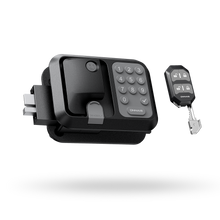
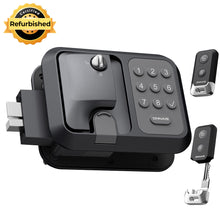
For travelers who split up during long sightseeing days, Guard SE offers a backlit keypad, two remote fobs, and a hidden mechanical key. It uses four AA batteries. Measure first: the door needs a 3.75 x 2.75-inch opening and 1.25 to 1.5-inch thickness. It fits right-hinged doors and is not compatible with glass doors, Class A RVs, or Class C two-pin doors. The Guard SE RV door lock is weather-resistant and listed as IPX5.
Use the RV door lock size guide before buying. Carry the mechanical backup and install four fresh matching batteries before a remote trip.
Common Yellowstone RV Planning Mistakes
- Booking by trailer length alone. Yellowstone RV size limits use RV plus vehicle. Measure the connected setup.
- Treating a campground maximum as every site's capacity. Reserve the correct category and expect the site to be assigned at check-in.
- Choosing a gateway without matching the sightseeing zone. A cheap site can buy several hours of extra driving.
- Towing the park loop for ordinary day trips. Set up once and use the smaller vehicle when possible.
- Ignoring fuel and seasonal road closures. Check the NPS road page, state 511 systems, and fuel range before departure.
Frequently Asked Questions About Yellowstone RV Parks
Which Yellowstone campground has full hookups?
Fishing Bridge RV Park is the only in-park campground with full hookups. Its current page lists water, sewer, and 50-amp electricity. It accepts hard-sided RVs only and uses combined-length categories up to 40, 65, or 95 feet, subject to limited inventory.
What is the largest RV allowed in Yellowstone?
The largest published in-park category is 95 feet of combined RV-plus-vehicle length at Fishing Bridge. That is a category maximum, not a guarantee for every date. Other campgrounds publish lower caps, from 25 feet at Lewis Lake to 60 feet at Bridge Bay and Madison.
How early should I make Yellowstone campground reservations?
Start when the date enters the official six-month rolling window. The NPS says sites can be booked exactly six months before the stay when inventory is available. Use Yellowstone National Park Lodges for its five campgrounds in 2026 and the NPS-listed Recreation.gov records for the others.
Which Yellowstone entrance is best for an RV?
The best Yellowstone entrance is the one that matches the base, park zone, and open route. West is practical for geyser areas, North for Mammoth and northern touring, South for a Grand Teton link, and East for a Cody-origin trip. Northeast demands the most route verification.
Can I drive an RV through Yellowstone?
Yes, when the road is open and the vehicle meets every current restriction. That does not mean towing the whole loop is a good sightseeing plan. Check construction limits, projected pass dates, weather, parking, and the full rig before choosing an entrance or cross-park move.
Match the Site, Entrance, and Route Before Booking
The best RV parks near Yellowstone National Park are the ones that fit the complete rig and the actual trip. Calculate combined length, choose the sightseeing zone, verify current roads, then reserve the correct category. Recheck campground status, state 511 reports, and NPS conditions before departure. A good Yellowstone plan keeps the RV parked when it can and moves it only when the next base earns the work.