RV Door Locks: Complete Guide to Replacement, Keyless Entry, Fitment & Security
Learn how to choose, measure, replace, secure, and troubleshoot RV door locks, including keyless RV locks, fitment, deadbolts, and safety tips.

Quick answer: RV door locks are not truly universal. Many replacement locks fit common travel trailer and fifth-wheel openings, often around 3.75 inches tall by 2.75 inches wide with a door thickness near 1.25 to 1.5 inches, but you still need to confirm cutout size, door thickness, hinge side, screen-door clearance, latch style, and RV type before buying.
RV door locks look simple until you need to replace one. Then the questions pile up fast: Will a keyless RV door lock fit my camper? Are RV door locks universal? Can someone else’s RV key open my door? What happens if the keypad battery dies? Should I rekey, replace, or upgrade to a smart lock?
This guide answers those questions in one place. You will learn how RV door locks work, when to replace them, how to measure your door, which keyless features matter, what actually improves security, how to install a replacement lock, and how to troubleshoot common problems before they ruin a trip.
The advice below is written for U.S. RV owners, especially travel trailer, fifth-wheel, camper, and towable RV owners. If you own a Class A or Class C motorhome, pay special attention to the compatibility sections because many standard towable RV locks do not fit motorhome-style doors.
Key Takeaways
- Most RV door lock problems come from fitment, worn hardware, lost keys, deadbolt misalignment, weak batteries, or unclear access control.
- Many towable RV replacement locks use a common cutout style, but “common” does not mean “universal.”
- Keyless RV door locks add convenience, but they still need a mechanical backup key and a battery plan.
- Security depends on more than the keypad: deadbolt throw, strike plate alignment, door frame condition, key control, and emergency egress all matter.
- Always test a new RV door lock from both outside and inside before relying on it on a trip.
What Are RV Door Locks?
RV door locks are compact exterior lock systems designed for recreational vehicle doors. A main RV entry lock usually combines a paddle handle, latch, keyed cylinder, interior release, and deadbolt in one assembly. Unlike many residential locks, an RV lock must fit a thin, lightweight door, tolerate vibration, resist outdoor exposure, and work with a smaller cutout.
The main entry lock protects the living space. It is different from baggage door locks, cam locks, slam latches, and compartment locks, which protect storage areas. Many RV owners upgrade the entry lock first because it affects daily access, nighttime convenience, lockout risk, and perceived security.
RV Entry Door Lock vs Residential Door Lock
A residential deadbolt is usually designed for a thick wood or metal house door. An RV entry lock is designed for a much thinner RV door and a specific latch cutout. That is why a home deadbolt rarely drops into an RV entry door without modification.
RV locks also need to handle road vibration, dust, rain, campground use, and repeated opening in uneven campsites. The best replacement is usually an RV-specific lock that matches your cutout and latch style.
Entry Door Lock vs Baggage Door Lock
An entry door lock protects the main living area. A baggage door lock protects exterior storage compartments. The two are often confused because both use keys, but they are not the same security layer.
Compartment locks can be vulnerable to common key codes on some RVs. Upgrading only the main entry lock does not automatically protect tools, hoses, generators, outdoor gear, or valuables stored outside the living space.
Handle Lock vs Deadbolt
The handle latch keeps the door closed. The deadbolt provides stronger secondary locking. If your RV door has both, use both when sleeping, leaving the campsite, or storing the RV.
A keypad or app changes how you unlock the door. It does not automatically make the deadbolt stronger. A secure RV lock setup needs access control, physical latch strength, proper alignment, and a reliable way to exit from inside.

Types of RV Door Locks
RV owners usually compare five lock categories: mechanical entry locks, deadbolt locks, keypad locks, fob locks, and app/Bluetooth locks. Some RVs also use baggage locks, cam locks, slam latches, or motorhome-specific hardware.
| Lock Type | Best For | Pros | Cons | Battery Required? |
|---|---|---|---|---|
| Mechanical RV entry lock | Budget replacement | Simple, familiar, no electronics | Key management and lockout risk | No |
| RV deadbolt lock | Extra physical security | Stronger than handle latch alone | Still depends on frame and alignment | No |
| Keypad RV door lock | Families and campground convenience | No key needed for daily entry | Needs batteries and code management | Yes |
| Remote fob RV lock | Fast access | Convenient in dark or bad weather | Fob can be lost or fail to pair | Yes |
| Bluetooth/app RV lock | Access sharing and logs | Useful for shared access | Phone/app dependency | Yes |
| Baggage/cam lock | Storage compartments | Protects exterior gear | Not a main entry lock | Usually no |
Standard Mechanical RV Door Locks
Mechanical RV door locks are the simplest replacement option. They are best when you want a lower-cost fix, do not want batteries, or need an OEM-style swap.
Choose this route if your current handle is worn, the key cylinder is failing, or you bought a used RV and want a fresh lock without app or keypad features. Mechanical locks can also be keyed alike, but convenience should be balanced against security.
RV Deadbolt Locks
The deadbolt is the part that matters most for physical resistance. A handle latch can keep the door closed, but a deadbolt usually provides better protection when the RV is parked or occupied.
Look for smooth deadbolt operation, solid engagement with the strike plate, and easy inside operation. A deadbolt that jams, rubs, or cannot open from inside should be fixed immediately.
Keypad RV Door Locks
Keypad RV locks let you unlock the door with a code. They are popular with families because kids can enter without carrying keys. They also help prevent accidental lockouts at the campground.
Good keypad features include backlit buttons, code customization, anti-peeping code entry, low-battery alerts, and a mechanical backup key. Avoid using obvious codes such as the last four digits of your phone number, the RV model year, or repeated digits.
Remote Fob RV Door Locks
Remote fobs make access faster, especially at night, in rain, or when your hands are full. Some systems let one fob control more than one lock, depending on the product.
The trade-off is fob management. Fobs can be lost, batteries can die, and pairing can fail. Always keep a backup mechanical key outside the RV in a safe, non-obvious place.
Bluetooth/App RV Door Locks
App-enabled RV locks can offer access sharing, battery status, lock/unlock controls, and operation records, depending on the model. They are useful for RV rentals, family sharing, and owners who want more control than a simple keypad.
Do not assume every app lock works over the internet. Many RV door locks use local Bluetooth, which means your phone must be near the lock. If remote unlocking matters to you, confirm exactly how the system connects before buying.
Fingerprint RV Door Locks
Some newer locks include fingerprint access. Fingerprint entry can be convenient, but wet fingers, dust, gloves, and sensor wear can reduce reliability. Treat fingerprint as a convenience layer, not the only way to enter.
Baggage Door Locks, Cam Locks, and Slam Latches
Storage compartments often use different locks from the main entry door. If you carry tools, power equipment, outdoor gear, or expensive accessories, plan a separate compartment-lock strategy.
When Should You Replace an RV Door Lock?
Replace an RV door lock when it becomes unreliable, when you buy a used RV, when you lose control of who has keys, or when your access needs change.
Replace Immediately If the Lock Is Unreliable
Do not ignore a lock that sticks, drags, jams, or only works when the door is pushed or lifted. Those symptoms can point to worn hardware, door sag, strike plate misalignment, frame movement, or a failing latch.
Replace or repair the lock before your next trip if:
- The key turns inconsistently.
- The deadbolt does not extend fully.
- The handle does not retract the latch.
- The door opens while traveling.
- The lock cannot open from inside.
- The door must be slammed to latch.
- The keypad, fob, or app fails repeatedly after fresh batteries.
Replace or Rekey After Buying a Used RV
When you buy a used RV, you usually do not know how many keys exist. Previous owners, dealers, service departments, storage facilities, and repair shops may have had access.
At minimum, rekey the lock or replace it. If the lock is old, worn, or poorly aligned, replacement is often the better long-term choice.
Replace If You Want Keyless Convenience
Keyless RV door locks are most useful for families, full-time RVers, pet owners, and anyone who has been locked out at a campground. A keypad or fob can make daily use easier, but the lock still needs to fit your door and open from inside reliably.
Repair, Rekey, or Replace?
| Situation | Best Action |
|---|---|
| You lost one key but the lock works | Order a replacement key or rekey |
| You bought a used RV | Rekey or replace |
| The deadbolt rubs | Adjust alignment before replacing |
| The keypad is dead | Replace batteries and troubleshoot first |
| The handle mechanism is worn | Replace the latch assembly |
| You want keypad, fob, or app access | Upgrade to a keyless RV door lock |
| The cutout is non-standard | Measure carefully and contact the lock maker |
Are RV Door Locks Universal?
No. RV door locks are not truly universal. Many replacement locks fit common towable RV openings, but compatibility still depends on your door cutout, door thickness, latch style, hinge side, screen door, window spacing, and RV type.
Some brands publish fit guides around a common opening of about 3.75 inches by 2.75 inches by 1.5 inches, especially for travel trailers and fifth wheels. ONNAIS also lists compatibility around a 3.75-inch by 2.75-inch opening and a 1.25-1.5-inch door thickness on its RV lock pages. Those specs are useful, but you should still measure your own door before buying.

The Common Towable RV Lock Opening
Many keyless RV door locks are designed for towable RVs with a rectangular cutout. The common cutout is often described as around 3.75 inches tall by 2.75 inches wide. That does not mean every travel trailer uses it, and it definitely does not mean every RV uses it.
Older RVs, cargo trailers, horse trailers, truck campers, and motorhome doors can use different hardware. Measure the cutout, not just the outside faceplate.
Door Thickness
Door thickness matters because the lock halves must clamp the door properly and the latch must align with the edge. A common range is about 1.25 to 1.5 inches, but products vary.
If your door is too thick, screws may not engage properly. If it is too thin, the lock may not clamp securely. Either problem can create poor alignment, rattling, water intrusion, or lock failure.
RV Type Compatibility
Travel trailers and fifth wheels are usually the best candidates for standard towable replacement locks. Truck campers, cargo trailers, and horse trailers may also work if the cutout and latch style match.
Class A and Class C motorhomes often use different motorhome-style doors and latch systems. Do not assume a towable RV keyless lock will fit a motorhome. Glass doors, two-pin systems, and unusual latch assemblies also need special caution.
Hinge Side and Handle Direction
Some locks need a left-hand or right-hand configuration. Stand outside the RV and look at the hinge side. If the hinges are on your right, you have one orientation; if they are on your left, you have the other.
Always follow the manufacturer’s definition because naming can vary. If the product offers reversible orientation, confirm the steps before installation.
Screen Door and Window Clearance
Many buyers measure the cutout but forget the interior knob. The lock may fit the door opening but hit the screen door, window frame, or interior trim.
Before tightening the new lock, close the screen door gently and check clearance. If the knob, battery cover, or thumb turn touches the screen door, stop and adjust before using the lock.
Strike Plate and Door Alignment
Sometimes the new lock is compatible, but the door system is not aligned. RV doors can shift because of leveling, gasket compression, frame flex, worn hinges, or road vibration.
If the deadbolt only works when you lift the door, push the door inward, or slam it, check the strike plate and door alignment before blaming the lock.
RV Door Lock Fit Score
Use this quick score before buying. If any factor is red, pause and verify with the manufacturer.

| Fit Factor | Green | Yellow | Red |
|---|---|---|---|
| Cutout | Matches product spec | Slightly larger | Smaller than required |
| Door thickness | Within range | Near edge of range | Outside range |
| RV type | Travel trailer or fifth wheel | Camper or cargo trailer | Class A/C without confirmed model |
| Screen door | Clears interior knob | Tight clearance | Hits knob or deadbolt |
| Window spacing | Clear space around faceplate | Needs careful check | Interferes with handle |
| Latch style | Same style | Similar style | Different motorhome latch |
How to Measure Your RV Door Lock Before Buying
Measure before you shop. Most returns and installation failures happen because the buyer measured the faceplate instead of the cutout, forgot the screen door, or assumed a motorhome door uses the same hardware as a travel trailer.
Tools You Need
You only need basic tools:
- Tape measure or ruler.
- Phillips screwdriver.
- Phone camera.
- Painter’s tape.
- Paper or notes app.
- The old lock model number, if visible.
Take photos before removing anything. Photos help you remember screw locations, latch orientation, wiring position, and strike plate placement.
Step 1: Measure the Cutout
Open the RV door and keep it open. Remove the interior screws and gently separate the interior and exterior halves of the lock. Measure the height and width of the rectangular door opening.
Do not measure only the exterior faceplate. The outside trim can be larger than the actual cutout. A lock that looks similar from the outside may still fail to fit the door opening.
Step 2: Measure Door Thickness
Measure the thickness of the RV door where the lock passes through. Many towable RV locks are designed for a narrow thickness range. If your door is outside the range, the lock may not clamp tightly or the screws may not reach.
Step 3: Check the Latch and Strike Plate
The latch tongue and deadbolt must line up with the strike plate in the door frame. If the old deadbolt rubbed or required lifting the door, note that issue before installing a new lock.
A replacement lock can only work as well as the door system around it. If the frame is shifted or the strike plate is too high, even a high-quality lock can feel defective.
Step 4: Confirm Hinge Side
Stand outside the RV and look at the door hinges. Note whether they are on the left or right. Then compare your observation with the lock manufacturer’s orientation instructions.
Do not rely on photos alone. Some product images are mirrored, and some brands define left-hand and right-hand differently.
Step 5: Check Screen-Door Clearance
Close the screen door slowly while holding the new lock in place or comparing the old interior handle depth. Check the thumb turn, battery cover, keypad housing, and interior knob.
This step matters because the lock can fit the cutout but still collide with the screen door.
Step 6: Record the Old Lock Brand and Key Code
Look for markings such as Bauer, FIC/Fastec, Global Link, Lippert, TriMark, Southco, or other brand names. Also record visible key codes if you are ordering replacement keys or deciding whether to rekey.
If you cannot identify the old lock, measurements become even more important.
Keyless RV Door Locks: Are They Worth It?
A keyless RV door lock is worth it if convenience, shared access, lockout prevention, and easier daily entry matter to you. It is not worth it if you expect electronics alone to solve every security problem or if you skip compatibility checks.

Benefits of Keyless RV Locks
Keyless locks solve everyday access problems:
- You can enter with a code instead of carrying a key.
- Kids and family members can access the RV without passing around keys.
- Fobs make entry faster at night or in rain.
- App features may support access sharing, battery checks, and operation history.
- A mechanical key can still provide backup access.
For families and pet owners, the biggest benefit is lockout prevention. If someone closes the door with the keys inside, a keypad can prevent a stressful situation.
Drawbacks of Keyless RV Locks
Keyless locks also add responsibilities:
- Batteries must be checked and replaced.
- Codes should be updated periodically.
- Fobs can be lost or need re-pairing.
- App access may depend on Bluetooth range, phone battery, and permissions.
- The lock must still fit the RV door.
If you upgrade to keyless entry, keep a backup key plan. Do not store the only backup key inside the RV.
Keypad vs Fob vs App vs Mechanical Key

| Access Method | Best Use Case | Main Risk | Recommendation |
|---|---|---|---|
| Keypad | Family and campground access | Forgotten code or worn buttons | Use a memorable but non-obvious code |
| Fob | Fast entry | Lost fob or sync failure | Keep a spare fob battery |
| Bluetooth/app | Access sharing and logs | Phone battery or pairing issue | Do not rely on app alone |
| Mechanical key | Emergency backup | Lost key | Store backup safely outside the RV |
Who Benefits Most From Keyless Entry?
A keyless RV door lock is especially useful for:
- Families with kids who come and go from the campsite.
- Full-time RVers who use the door many times a day.
- Pet owners who cannot risk being locked out.
- RV rental hosts who need controlled guest access.
- Owners who arrive after dark and want quick entry.
- Campers who often carry gear, groceries, or water jugs.
What About Bluetooth and App Control?
Bluetooth app control is convenient when it is clearly explained. It may let you lock or unlock nearby, manage users, check battery level, or see recent operation records. But Bluetooth usually means local range, not internet-based remote access.
Before buying, confirm whether the app works only near the lock or from anywhere. Also check whether access sharing requires each person to install the app.
Battery and Emergency Access Planning
Every keyless RV lock needs a battery routine. Replace batteries before long trips, keep spare batteries in the tow vehicle, and test low-battery warnings.
If the lock supports emergency power, learn how it works before you need it. If it uses a mechanical key backup, test that key after installation and store it safely.
RV Door Lock Security: What Actually Makes an RV Safer?
RV door lock security is not just about whether the lock has a keypad. True security comes from four layers: access control, physical resistance, reliability, and emergency egress.

Factory Keys, Master Keys, and Common Key Codes
Many RV owners worry that someone else’s key could open their RV. The concern is not imaginary, but it needs nuance. Main entry locks, baggage locks, and storage compartment locks may use different systems. Some storage locks are more likely to use common key codes than the main entry door.
If you bought a used RV, treat key history as unknown. Rekeying or replacing the entry lock is a practical first step. Upgrading storage compartment locks may also be necessary if you carry valuable gear.
Keyed-Alike vs Unique Keys
Keyed-alike locks are convenient because one key can open multiple doors or compartments. That convenience is attractive on large RVs with many locks.
The downside is risk concentration. If one keyed-alike key is lost, copied, or shared, it may open more than one lock. Unique keys reduce that risk but create more key management.
A balanced strategy is to prioritize unique or upgraded access for the main entry door and high-value storage compartments. Use keyed-alike convenience only where the risk is acceptable.
Deadbolt Strength Matters More Than Keypad Convenience
A keypad controls who can unlock the door. It does not automatically strengthen the door frame or deadbolt. A lock with a weak strike plate, short throw, loose screws, or poor alignment can still be vulnerable.
When comparing RV door locks, look beyond access methods. Check deadbolt operation, housing material, gasket seal, screw quality, and whether the interior thumb turn opens smoothly.
Weather Resistance and Corrosion
RV locks live outdoors. Rain, dust, road grime, UV exposure, and temperature swings can affect the keypad, fob receiver, battery compartment, and mechanical cylinder.
Look for weather-resistant construction, a good gasket, durable coating, and easy battery access. After heavy rain or long storage, inspect the lock before the next trip.
Emergency Egress and Safety
A secure RV lock should keep unwanted visitors out without trapping people inside. Always test the inside release and thumb turn after installation. If a door cannot open from inside, treat it as a safety issue, not a minor inconvenience.
Safety recalls and service documents in the RV industry have involved latch or deadbolt issues that could affect door operation. The lesson for owners is simple: after replacing a lock, test inside exit every time.
Whole-RV Security
The door lock is only one layer. A stronger security plan can include:
- Entry door deadbolt.
- Storage compartment lock upgrades.
- Hitch, coupler, or kingpin lock.
- Wheel lock.
- Motion lighting.
- Good campsite habits.
- Not leaving valuables visible.
- GPS tracker or alarm if appropriate.
How to Replace an RV Door Lock
Replacing an RV door lock is usually a manageable DIY job if your new lock fits the existing opening. Many owners can complete the swap with a screwdriver, but the job should not be rushed.

Before You Start
Open the RV door and keep it open during installation. Do not close the door with a partially installed lock. If the latch or deadbolt is not aligned, you can lock yourself out or trap the door closed.
Before removing the old lock:
- Confirm the new lock matches your measurements.
- Photograph the old lock from inside, outside, and edge views.
- Read the installation manual.
- Install fresh batteries for keyless locks.
- Keep mechanical keys in your pocket, not inside the RV.
Tools and Parts
Most replacements need:
- Screwdriver.
- New RV door lock kit.
- Strike plate or included hardware.
- Gasket or weather seal.
- Batteries for keyless models.
- Manual and programming instructions.
Only drill if the manufacturer specifically requires it and you understand the modification. If the lock is marketed as a direct replacement, forcing or drilling usually means the fit is wrong.
Step-by-Step Replacement Process
- Open the RV door and keep it open.
- Remove the interior screws.
- Separate the interior and exterior lock halves.
- Clean the cutout and inspect the door edge.
- Dry-fit the new exterior half.
- Route any keyless wiring carefully.
- Attach the interior half without pinching wires.
- Install batteries.
- Tighten screws gradually.
- Test the handle latch, deadbolt, key, keypad, fob, and app before closing the door fully.
Common Installation Mistakes
Avoid these mistakes:
- Measuring the faceplate instead of the cutout.
- Forgetting door thickness.
- Pinching the electronic cable.
- Tightening screws before alignment.
- Ignoring screen-door clearance.
- Installing the latch upside down or reversed.
- Closing the door before testing inside operation.
- Forcing a lock into a smaller opening.
The 10-Minute Post-Install Acceptance Test
Before you trust the lock on a trip, run this test:
- The door closes without slamming.
- The paddle latch retracts smoothly.
- The deadbolt extends fully.
- The deadbolt does not scrape the strike plate.
- The mechanical key works from outside.
- The inside thumb turn opens the door.
- The keypad code works.
- The fob or app works if included.
- The screen door closes without hitting the lock.
- Backup keys are stored safely.
RV Door Lock Troubleshooting
Most RV door lock problems fall into five categories: key/cylinder problems, deadbolt alignment, battery failure, fob/app pairing, and door-frame movement.

Key Will Not Turn
If the key will not turn, check whether you are using the correct key. Then inspect for a bent key, debris, corrosion, or a damaged cylinder.
Do not force the key. Forcing it can break the key inside the cylinder. Use lock-safe lubricant only if the manufacturer allows it.
Deadbolt Rubs or Will Not Extend
If the deadbolt rubs, the lock may not be the problem. Check whether the RV is level, the door has sagged, the gasket is compressed, or the strike plate is misaligned.
A common sign of alignment trouble is a deadbolt that works when the door is open but sticks when the door is closed.
Keypad Does Not Respond
Start with batteries. Replace them with fresh batteries and check polarity. Then inspect the battery contacts and reset or reprogram the code according to the manual.
If the keypad still does not respond, check whether the internal cable was pinched during installation.
Fob Does Not Work
Replace the fob battery, then re-pair the fob. Make sure the main lock batteries are also fresh. Test the fob close to the door first, then from normal use distance.
If one fob works and another does not, the issue is likely the fob. If no fobs work, the issue may be lock power, receiver pairing, or programming.
App Will Not Connect
For Bluetooth locks, stand near the door, enable Bluetooth permissions, check lock battery level, and confirm the lock is in pairing mode. If the app was recently updated, check whether the lock needs to be re-paired.
Do not assume an app issue means the lock is broken. Phone permissions, battery-saving mode, and distance can all interrupt Bluetooth access.
Door Will Not Open From Inside or Outside
Treat this as urgent. Do not keep forcing the handle. Try the inside thumb turn, alternate RV exit, mechanical key, manufacturer support, roadside assistance, or a locksmith.
After the door opens, do not continue using the lock until the cause is fixed.
Best RV Door Lock Features to Compare Before Buying
The best RV door lock is the one that fits your door, supports how you camp, and still opens reliably in an emergency. Do not buy based only on the most advanced access method.
Fitment First
Fit comes before features. Confirm cutout size, door thickness, latch style, hinge side, screen-door clearance, and RV type before comparing keypad, fob, or app options.
Access Methods
Decide which entry methods you really need:
- Key only.
- Keypad plus key.
- Keypad plus fob plus key.
- App plus keypad plus fob plus key.
- Fingerprint plus backup methods, if available.
For most RV owners, the safest setup includes at least two electronic methods and one mechanical backup.
Construction and Weather Resistance
Look for a durable housing, weather-resistant gasket, corrosion-resistant finish, and protected battery compartment. Zinc alloy or metal construction can be a positive sign, but fit and alignment still matter.
Security Features
Useful security features can include:
- Built-in deadbolt.
- Anti-peeping password entry.
- Custom codes.
- Fob management.
- App access sharing.
- Operation records.
- Mechanical backup key.
Usability Features
Daily usability matters. Consider backlit buttons, clear instructions, easy battery replacement, sound/backlight settings, fob range, app clarity, and support videos.
Buyer Scorecard
| Feature | Why It Matters | Priority |
|---|---|---|
| Cutout fit | Prevents returns and drilling | Must-have |
| Door thickness fit | Keeps lock clamped securely | Must-have |
| Deadbolt operation | Core security and safety layer | Must-have |
| Mechanical backup | Emergency entry | Must-have |
| Weather resistance | Outdoor durability | Important |
| Screen-door clearance | Prevents install failure | Important |
| Battery access | Easier maintenance | Important |
| Support/manuals | Reduces DIY risk | Important |
RV Door Locks by RV Type
Different RV types use different door hardware. A lock that fits a travel trailer may not fit a motorhome.

Travel Trailers
Travel trailers are often the easiest fit for standard replacement RV door locks. Still, measure the cutout and thickness before buying.
Fifth Wheels
Fifth wheels often use similar towable RV entry locks. If the cutout, thickness, and latch orientation match, keyless upgrades are commonly possible.
Truck Campers
Truck campers vary more. Measure carefully and check screen-door clearance because space can be tight.
Cargo Trailers and Horse Trailers
Some RV-style locks fit cargo or horse trailers, but these doors may use different thicknesses, edge hardware, or latch systems.
Class A Motorhomes
Class A motorhomes often require motorhome-specific locks. Standard towable RV keyless locks may not fit.
Class C Motorhomes
Class C motorhomes can also use different latch systems. Confirm with the lock maker before ordering.
Glass RV Doors
Many replacement locks do not fit glass doors. If your RV has a glass entry door, verify compatibility before buying.
RV Door Lock Maintenance
A good lock still needs maintenance. Add these checks to your trip routine.

Monthly Check
- Test key, keypad, fob, and app.
- Check screws for looseness.
- Verify deadbolt movement.
- Inspect gasket and faceplate.
Before Each Trip
- Replace weak batteries.
- Test the backup key.
- Confirm the door opens from inside.
- Check screen-door clearance.
- Verify the deadbolt works when the RV is level and when loaded.
After Rain, Dust, or Storage
- Inspect for corrosion.
- Clean the keypad surface.
- Check battery compartment dryness.
- Make sure buttons are not sticking.
Annual Security Review
Once a year, review who has keys, fobs, app access, and codes. Remove old users, update codes, replace weak fob batteries, and consider rekeying if keys were lost.
Key Strategy: Replacement Keys, Rekeying, or Replacing the Lock
Your key strategy should match your risk. The easiest option is not always the safest.

| Option | Best For | Advantage | Trade-Off |
|---|---|---|---|
| Order replacement key | One lost key | Cheapest | Old keys may still exist |
| Rekey existing lock | Used RV with good hardware | Keeps current lock | Not always available |
| Keyed-alike setup | Many low-risk locks | Convenience | One key opens more locks |
| Replace mechanical lock | Worn or unknown lock | Fresh hardware | No keyless convenience |
| Upgrade to keyless | Convenience and access sharing | Code/fob/app access | Needs batteries and setup |
Recommended RV Door Lock by Owner Scenario
| Owner Scenario | Recommended Strategy |
|---|---|
| Weekend camper | Mechanical or keypad lock with backup key |
| Family with kids | Keypad + fob + mechanical backup |
| Pet owner | Keyless lock plus external backup key plan |
| Full-time RVer | Durable keyless lock with deadbolt and battery routine |
| RV rental host | App/access sharing if supported, plus code rotation |
| Used RV buyer | Rekey or replace immediately |
| Storage-lot owner | Upgrade entry lock plus compartment and hitch security |
| Older RV owner | Measure first and prioritize fit over features |
| Class A/Class C owner | Look for motorhome-specific lock |
Where ONNAIS Keyless RV Door Locks Fit
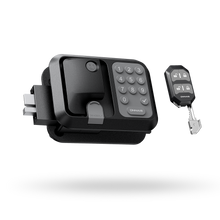
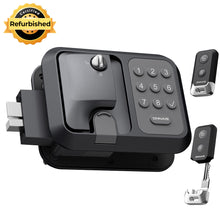
If your RV measurements match, an ONNAIS keyless RV door lock can make sense when you want multiple access methods in one upgrade. ONNAIS RV locks emphasize keypad entry, app control, remote key fobs, mechanical backup keys, deadbolt design, anti-peeping password entry, and outdoor-ready construction.
 This type of lock is best for compatible travel trailers, fifth wheels, and towable RVs where the cutout and thickness match the product specifications. It is not the right choice if your RV uses an incompatible Class A/Class C motorhome door, glass door, unusual latch system, or non-matching cutout.
Before buying, compare your measurements with the product page, confirm the excluded RV types, and check screen-door clearance. If everything matches, keyless entry can turn a frustrating daily access point into a more convenient and controlled entry system.
RV Door Lock FAQs
Are RV door locks universal?
No. Many replacement locks fit common towable RV openings, but RV door locks are not truly universal. Always check cutout size, door thickness, latch style, hinge side, screen-door clearance, and RV type.
What size are most RV door locks?
Many towable RV keyless locks reference a cutout around 3.75 inches by 2.75 inches and a door thickness around 1.25 to 1.5 inches. However, product specs vary, and older or motorhome-style doors may differ.
How do I measure an RV door lock cutout?
Open the door, remove the interior screws, separate the old lock halves, and measure the actual rectangular opening in the door. Do not measure only the outside faceplate.
Can I replace my RV door lock myself?
Yes, many RV owners can replace a compatible lock with a screwdriver. The key is confirming fit before installation and testing the latch, deadbolt, key, keypad, fob, and inside release before closing the door fully.
Do keyless RV door locks fit all campers?
No. Some fit travel trailers, fifth wheels, truck campers, or cargo trailers, but only if the cutout, thickness, and latch style match. Always measure first.
Do keyless RV locks fit Class A or Class C motorhomes?
Many standard towable RV keyless locks do not fit Class A or Class C motorhomes. Motorhomes often use different door hardware, so you need a motorhome-specific product or confirmed compatibility.
Can someone else’s RV key open my door?
It is possible in some cases, especially with certain common key systems or shared-access histories. Used RV buyers should rekey or replace locks, and owners should separately evaluate entry locks and compartment locks.
What is a CH751 key?
CH751 is a commonly discussed key code associated with many RV storage compartments and utility locks. It is one reason owners often upgrade compartment locks as part of a broader RV security plan.
Should all my RV locks be keyed alike?
Keyed-alike locks are convenient, but they also increase risk if the key is lost or copied. For the main entry door and high-value storage areas, unique keys or upgraded access may be safer.
Are keyless RV door locks worth it?
They are worth it for many owners who want easier entry, family access, fobs, app features, or lockout prevention. They are not a substitute for measuring fit, maintaining batteries, or keeping a backup key.
What happens if the battery dies in a keyless RV lock?
Most keyless RV locks provide a mechanical backup key, and some offer emergency power options. Check your manual before your trip and keep backup keys outside the RV in a safe location.
Is a keypad lock better than a fob lock?
A keypad is better for shared access because no physical fob is needed. A fob is better for quick entry. Many owners prefer a lock that includes both.
Why won’t my RV deadbolt line up?
Deadbolt alignment problems often come from door sag, RV leveling, gasket compression, strike plate position, loose screws, or frame movement. Test the lock with the door open and closed to isolate the cause.
Can I use a residential deadbolt on an RV door?
Usually no. Residential deadbolts are designed for different door thicknesses and bore patterns. Use an RV-specific lock unless a professional confirms the modification is safe.
How often should I replace RV lock batteries?
Replace batteries before long trips, at the start of each camping season, or whenever low-battery alerts appear. Keep spare batteries in the tow vehicle.
Conclusion
The best RV door lock is not simply the strongest-looking lock or the one with the most electronics. It is the lock that fits your door, matches how you camp, gives you reliable access, supports a real backup plan, and opens safely from inside every time.
Start with measurements. Confirm the cutout, thickness, RV type, latch style, hinge side, and screen-door clearance. Then choose the access method that fits your lifestyle: mechanical key, keypad, fob, app, or a combination.
If your RV is compatible and you want easier daily access, a keyless RV door lock can be a smart upgrade. Just remember that convenience and security work best together when the deadbolt, strike plate, battery routine, backup key, and emergency exit all work as one system.