Keyless RV Door Lock vs Standard Lock: Pros, Cons & Best Fit

Quick answer: A standard RV door lock is simple, familiar, less expensive, and does not depend on batteries. A keyless RV door lock adds keypad, remote fob, or app-based access depending on the model, making it easier to enter and share access without passing around a physical key. Neither type is automatically more secure: build quality, deadbolt design, correct fit, installation, and responsible key or code management matter more than whether the lock is mechanical or electronic.
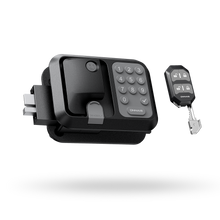
A standard RV door lock uses a physical key and mechanical latch or deadbolt, while a keyless RV door lock adds at least one electronic access method, such as a keypad, remote fob, or Bluetooth app, while often retaining a mechanical backup key.
The better option depends on how you use your RV. An occasional solo camper may value the simplicity of a standard lock. A family entering and leaving the camper throughout the day may get more value from a keypad. Owners who regularly carry equipment or want several access methods may prefer a fob- or app-enabled model.
This comparison separates daily convenience from actual lock security so you can choose the access system that fits your travel habits without assuming that newer technology automatically means better protection.

Keyless RV Door Lock vs Standard Lock: Quick Comparison
| Factor | Standard RV lock | Keyless RV lock |
|---|---|---|
| Primary access | Physical key | Keypad, fob, app, or a combination depending on model |
| Power | No batteries required | Batteries normally required for electronic access |
| Backup access | Spare physical key | Often a mechanical key; exact backup methods are model-specific |
| Sharing access | Duplicate or hand over a key | Share a code or supported electronic method |
| Daily convenience | Simple but requires carrying the key | Easier for frequent entry, families, and hands-full situations |
| Setup | Little or no electronic setup | Battery installation, code setup, pairing, or app setup may be required |
| Typical failure concern | Lost, damaged, worn, or duplicated key | Low batteries, programming problems, electronic faults, or mechanical binding |
| Upfront cost | Usually lower | Usually higher, depending on features |
| Security | Depends on construction, key control, fit, and installation | Depends on construction, credential management, fit, and installation |
| Best fit | Owners who want simplicity and minimal maintenance | Owners who value flexible access and reduced dependence on one physical key |
Understanding Traditional RV Locks
Traditional RV locks operate with a physical key. They've been the standard for decades, and many RVs still come equipped with them.
A standard mechanical lock is easy to understand: insert the correct key, turn the cylinder, and operate the latch or deadbolt. It does not need pairing, a phone, a remote, or electronic programming.
That simplicity remains valuable. A mechanical lock may be the better choice when the RV is used infrequently, only one or two people need access, the owner does not want to manage batteries, or the budget does not justify electronic features.
Pros of Traditional RV Locks
Reliability: Mechanical locks are generally less prone to electronic malfunctions or battery issues.
Cost-Effective: Typically, traditional RV door locks are more affordable upfront than their keyless counterparts.
Familiarity: Most people are accustomed to using keyed locks, so there's no learning curve.
Simple Operation: No codes to remember or apps to manage; just a key.
Where Standard RV Locks Become Less Convenient
Keys must be carried: Every person who needs independent access needs the correct key or access to a spare.
Keys can be misplaced: Small RV keys are easy to leave inside, lose around a campsite, or bury in a bag.
Sharing requires duplication: Family members, co-owners, or trusted guests may need additional physical copies.
Hands-full entry can be awkward: Finding and turning a key is less convenient while carrying groceries, firewood, luggage, tools, or outdoor gear.
Unknown copies can create concern: When buying a used RV or losing a key, you may not know how many working copies remain in circulation.
A standard lock is not a poor choice merely because it uses a key. It becomes the wrong choice when the owner’s access needs have outgrown a key-only system.
The Rise of Keyless RV Locks
Keyless RV locks have gained immense popularity due to their convenience and advanced features. These often include a keypad RV door lock, a digital RV door lock, or even a smart RV door lock that connects to your smartphone.
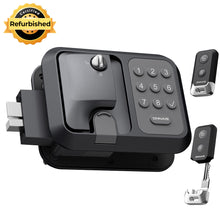
The term “keyless” does not describe one fixed feature set. Some models add only a keypad. Others combine keypad entry with remote fobs, Bluetooth app control, and a mechanical backup key. Always check the exact access methods listed for the model being considered.
The main upgrade is not simply replacing metal keys with electronics. It is giving the owner more than one practical way to enter the RV.
What Keyless Entry Adds
Keypad access: Enter a code instead of carrying a key around the campsite.
Remote fob access: Unlock with a button when nearby, if the model includes a fob.
App control: Use a supported Bluetooth app when the lock model includes app functionality.
Shared access: Give trusted users a code rather than producing several physical key copies.
Multiple backups: Some locks combine electronic entry with a mechanical override key.
Keyless Lock Tradeoffs
Battery Dependence: Keyless RV locks require batteries to operate their electronic access features.
Higher Cost: The initial investment for a keyless RV door lock is generally higher than for a basic traditional lock.
Code Management: Owners need to remember, protect, and update access codes when necessary.
Setup takes more time: Codes, remotes, or apps may need to be configured after installation.
Electronics do not fix mechanical problems: A keypad cannot compensate for a mismatched cutout, binding deadbolt, misaligned strike plate, or sagging door.
Features vary by model: Do not assume every keyless lock includes an app, fob, emergency power, access history, or the same low-battery behavior.
Daily Convenience: Where Keyless Entry Makes the Biggest Difference
Keyless entry is most valuable when the RV door is used repeatedly throughout the day. At a campsite, owners may walk to the bathhouse, take a pet outside, visit another campsite, load equipment, or move between the RV and picnic area many times.
A keypad reduces the need to carry a key for every short trip. Family members or trusted travel partners can enter without waiting for the person holding the only key. A fob can make entry faster while carrying supplies. An app can add another supported access method for owners who already manage much of their travel from a phone.
These are convenience advantages, not proof of stronger physical security. The value comes from matching the access method to the way the RV is actually used.
Mechanical Backup Still Matters
A keyless upgrade should reduce dependence on one access method, not create dependence on electronics alone. When a model includes a mechanical override key, keep that key somewhere safe and accessible outside the locked RV.
If batteries run low, a keypad stops responding, a fob is misplaced, or a phone is unavailable, the backup method becomes part of the lock’s reliability plan. Owners should understand the exact low-battery warnings, backup procedure, and battery replacement process for their model before relying on it during travel.
Safety Test: Keyless vs. Traditional – Which Is More Secure?
When comparing keyless vs traditional RV locks purely on security, it's not a straightforward answer. The security level largely depends on the quality and features of the specific lock, rather than just its type.
A weak or poorly fitted keyless lock is not automatically more secure than a well-built mechanical lock. Likewise, a basic factory mechanical lock should not be judged solely by the fact that it uses a key.
Security Factors That Matter for Both Types
Correct compatibility: The lock must match the door opening, thickness, handing, latch system, and clearance.
Deadbolt and latch operation: Both must engage smoothly without forcing the door.
Installation quality: Loose screws, uneven clamping, or a misaligned strike plate can reduce reliability.
Key or credential control: Protect spare keys, avoid sharing permanent codes unnecessarily, and change credentials when access should be revoked.
Door and frame condition: A strong lock cannot compensate for a damaged door, weak frame, or poorly aligned hardware.
CH751 discussions should also be kept in context. That key code is commonly associated with many RV baggage or storage-compartment locks; it should not be used as a blanket description of every main RV entry door lock.
Security verdict: Choose the better-built, correctly fitted lock and manage its keys or electronic credentials responsibly. Access technology alone does not determine security.
Compatibility and Installation Are the Same First Check
A keyless upgrade still has to fit the same physical RV door. Before choosing either a standard replacement or a keyless model, verify:
The existing door cutout and lock family
Door thickness
Latch and deadbolt position
Hinge direction and lock handing
Screen-door clearance
Window, trim, shade, and grab-handle clearance
Whether the door uses towable-style, motorhome-specific, or automotive hardware
Do not choose a keyless lock based only on its keypad, fob, or app features. Fit comes before features. If the replacement does not match the existing hardware family, electronic convenience is irrelevant.
Making Your Choice: Key Considerations
When deciding between keyless vs traditional RV locks, consider:
Your Budget: Determine how much you're willing to invest in your RV door lock.
Desired Convenience: Decide whether key-only access is enough or whether a keypad, fob, or app would solve a real travel problem.
Security Needs: Evaluate construction, deadbolt operation, key or code control, and the condition of the RV door and frame.
Tech Comfort Level: Decide whether you are comfortable managing batteries, codes, remotes, or an app.
Installation: Confirm that the replacement is compatible before changing the door.
Which RV Owners Are Better Suited to Each Lock?
| Your situation | Likely better starting point | Why |
|---|---|---|
| You use the RV occasionally and prefer minimal maintenance | Standard mechanical lock | No batteries, programming, pairing, or code management |
| You travel alone and reliably manage one key | Standard mechanical lock may be enough | Extra access methods may provide limited practical value |
| Several family members need independent entry | Keypad-equipped keyless lock | Reduces dependence on duplicate physical keys |
| You frequently carry groceries, tools, luggage, or camping gear | Keyless lock with keypad or fob | Faster access when hands are full |
| You regularly misplace or leave keys inside | Keyless lock with mechanical backup | Adds another entry method without removing backup access |
| You do not want to monitor batteries | Standard mechanical lock | Avoids electronic power maintenance |
| You want phone-based access management | Bluetooth-enabled smart RV lock | Adds app control when supported by the exact model |
| Your existing lock or door type is unusual | Verify compatibility before choosing either | Hardware family and fit determine what can be installed |
Is Keyless Entry Worth the Upgrade?
Keyless entry is usually worth considering when it removes a repeated inconvenience. If several people need access, the door is used many times a day, keys are frequently misplaced, or entering with full hands is a regular problem, the additional access methods can provide meaningful daily value.
The upgrade may provide less value when the RV is used only a few times a year, one person manages the key reliably, and the owner prefers the lowest possible maintenance. In that situation, a good mechanical replacement may be the more practical choice.
Do not choose keyless entry merely because it appears more advanced. Choose it when keypad, fob, or app access solves a specific problem in the way you camp.
Comparing ONNAIS Keyless RV Door Lock Options
ONNAIS offers multiple keyless RV door lock models with different access methods. Exact features and compatibility must be confirmed on each current product page rather than assumed from the word “keyless.”
Before ordering, compare the model’s supported door opening, door thickness, handing, RV type, keypad functions, remote fob support, app support, mechanical backup, weather rating, and installation requirements.
After confirming that your door is a realistic candidate, review the available keyless RV door locks.
Frequently Asked Questions
Are keyless RV door locks more secure than standard locks?
Not automatically. Security depends on lock construction, deadbolt design, correct fit, installation, door and frame condition, and how well the owner controls keys or electronic credentials. Keyless access can improve code-based access management, but electronics alone do not guarantee stronger physical security.
What happens if a keyless RV lock battery dies?
The result is model-specific. Many keyless RV locks retain a mechanical backup key, while some may provide other emergency options. Check the exact model instructions, replace batteries before they are depleted, and keep the backup method accessible outside the locked RV.
Can I replace a standard RV lock with a keyless lock?
Yes, if the keyless lock matches the existing door opening, thickness, latch position, handing, RV hardware family, and surrounding clearance. Keyless features do not make an incompatible lock fit.
Do keyless RV locks still have a physical key?
Many models include a mechanical override key, but this should be verified on the exact product page. Do not assume every keyless model provides the same backup methods.
Is a keypad, remote fob, or app better?
A keypad is useful when you do not want to carry anything. A fob can be faster when you are nearby or carrying gear. An app can add phone-based control and settings when supported. The best method depends on your travel habits, and some locks combine several methods.
Are standard RV locks more reliable?
Standard locks avoid battery and electronic problems, but their keys, cylinders, latches, and deadbolts can still wear, corrode, bind, or become misaligned. Keyless locks add electronic maintenance but often retain mechanical components and backup access.
Which lock is better for families?
A keypad-equipped keyless lock is often more convenient for families because multiple trusted users can enter without carrying duplicate keys. Parents should still manage codes carefully and ensure every user understands how to open the door from inside.
Conclusion
A standard RV door lock is a strong choice when simplicity, low cost, and freedom from battery maintenance matter most. A keyless RV door lock is a better fit when keypad, fob, or app access solves frequent key-management and shared-access problems.
The decision should not be reduced to “old technology versus new technology.” Compare the actual lock quality, door compatibility, backup access, maintenance requirements, and the way you use your RV.
Choose a standard lock if one reliable key is enough. Choose keyless entry if multiple access methods will make everyday camping easier—and always confirm physical compatibility before ordering.