How to Secure an RV at a Campground: A Practical Checklist
Follow an RV campground security checklist for arrival, day trips, night, and departure. Protect doors and gear, document damage, and respond safely.

A good RV campground security routine is mostly finished before you sit down with your coffee. Walk the site, lock the access points, secure the gear a stranger could grab quickly, and decide what happens if something looks wrong. Then repeat the small checks when you leave, at night, and before departure.
This is a practical checklist for public campgrounds, private RV parks, and overnight stops. It covers theft deterrence and evidence. It does not replace fire-safety planning, emergency instructions, or the rules of the property you are using.
The four-stage campground security routine
Think of security in four short passes:
- Arrival: Learn the site, the exits, the host location, and the lighting before you set up.
- Daytime absence: Lock the RV, reduce visible temptation, and secure anything outside that can walk away.
- Night: Keep the routine quiet, keep pathways clear, and know which door opens from inside.
- Departure: Photograph the condition, collect every item, and leave no spare key or loose gear behind.
The point is not to make your campsite look like a bunker. It is to remove easy opportunities and make a problem easier to report.
Arrival checklist: learn the site before you settle in
Take five minutes before opening every slide-out.
- Locate the campground office, host, emergency number, and nearest marked exit.
- Check that your parking position does not block a fire lane, access road, or another site.
- Look at the main entry, screen door, baggage doors, cab doors, windows, and outside storage compartments.
- Note broken lights, damaged gates, loose fencing, or a camera that appears pointed away from the entrance. Report conditions to the host instead of trying to repair or confront anyone.
- Choose where bikes, chairs, coolers, and grills will sit when you are away. Keep high-value items out of direct view from the road or walking path.
- Photograph the RV exterior and any existing damage. Include the date in your private file, not in a public post that announces your location.
- Test the door from inside and outside. Make sure the latch catches without force and that an emergency exit remains usable.
The National Park Service campground guidance is useful for planning a site and following property expectations. It is not a promise that a particular campground has a certain camera, gate, or patrol setup.
First-party photo brief
Leaving for a hike, meal, or shower
A campsite can feel private while you are sitting in it. Once you walk away, it is an unattended vehicle with visible belongings. Before leaving:
- Close and lock the main entry door, screen door, windows, roof vents, and every baggage compartment.
- Remove keys and spare fobs from exterior storage. Do not leave a key on a tire, behind a propane cover, or in another obvious hiding place.
- Bring in portable electronics, wallets, medication, documents, and anything small enough to grab in one motion.
- Secure bikes and outdoor equipment with a device suited to the item and the campground rules. A cable slows a casual grab; it does not guarantee recovery.
- Retract or secure an awning according to the RV and awning manuals, especially when weather or foot traffic could move it.
- Check that propane, cooking equipment, and electrical connections are left in the condition required by the campground and the equipment manuals.
- Take a quick photo of the locked entry and gear layout if you are leaving for several hours. It gives you a reference if you return to a moved or damaged item.
If the campsite requires a particular lock, light, camera, or storage practice, follow that rule. Do not attach a cable across a walkway or an exit. Security that creates a trip hazard is a bad trade.
Night checklist: make the routine quiet and reversible
At night, the goal is a clear path and a known response, not a complicated gadget display.
- Lock the main entry and check that the latch is fully engaged rather than resting on the first catch.
- Close windows and verify that curtains or shades do not advertise expensive gear.
- Keep shoes, a flashlight, phone, and the key or fob you are authorized to use in a consistent place.
- Keep the path to the exit clear. Do not stack bikes, chairs, coolers, or storage bins in front of the door.
- Turn off equipment that the manual or campground rules say to turn off. Do not leave heaters, cooking appliances, or improvised lights unattended.
- If you use a camera or light, check that it does not shine into a neighboring site or violate campground privacy rules.
- Tell every adult where the host contact and emergency number are. Children should know how to call for help, but adults control keys, codes, and firearms.
The US Fire Administration RV safety guidance and the National Park Service RV fire-safety article should inform your alarm, escape, and maintenance plan. Theft deterrence never comes before a clear exit.
Departure checklist: leave no easy win behind
Before you pull out or hand back a site:
- Walk the full site in a circle. Collect chocks, leveling blocks, cords, hoses, chairs, toys, and small tools.
- Check the entry lock, screen latch, baggage doors, hitch or coupler, and windows.
- Confirm every key, fob, and temporary access credential is with an authorized adult.
- Photograph the RV exterior, tires, hitch, compartments, and any new mark or damage.
- Report damage or missing property to the campground through its stated process. Ask for a report number or written confirmation.
- Remove the campsite location from public posts if you are still there. A live location can tell people when a site is empty.
- Review your private inventory and receipts if an item is missing. Do not publish serial numbers or a complete gear list.
Build a campground threat-to-action map
A small worksheet makes the routine easier to repeat. Draw your site as four zones:
| Zone | What to mark | Action before leaving |
|---|---|---|
| Entry | Main door, screen door, windows | Test the latch, lock, and inside release |
| Grab zone | Chairs, bikes, coolers, tools, propane accessories | Bring in, tether, or store according to site rules |
| View zone | What a passerby can see through a window or open storage bay | Close blinds, remove temptation, record sensitive items privately |
| Report zone | Host, office, emergency number, camera or gate contact | Save the correct contact and property procedure |
This map is intentionally simple. It separates a lock from detection, evidence, and recovery. A door lock can slow entry. A camera may document movement. Neither guarantees a police response or returns a stolen item.
An ONNAIS entry-lock example, with fit checks

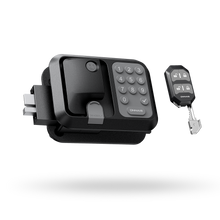
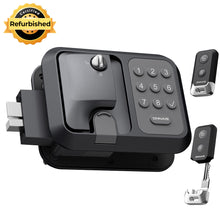
When the problem is the main RV entry lock, ONNAIS Guard Smart gives you four ways to get in: the ONNAIS app through Bluetooth, a keypad password, a remote key fob, and a mechanical key. It also includes an internal deadbolt, a temporary emergency-power port, and a weather-resistant exterior. The app can show battery level, manage fobs, show operation history, share access with registered users, and create up to 10 one-time passwords.
That is useful for a family arriving with groceries or a host who needs a one-time entry code. It is not internet remote control, GPS, or a replacement for a layered campground routine. Keep the mechanical key controlled, change credentials when access changes, and follow the current manual.
Fit matters. Guard Smart requires a 3.75-inch-high by 2.75-inch-wide cutout, a 1.25 to 1.5-inch door, a 1.5-inch latch-opening distance, and compatible right-hinged geometry. The product page excludes Class A RVs, Class C two-pin types, and left-hinged doors. We do not call it universal, theft-proof, or fully waterproof. Use the RV door lock fit guide before ordering.
If something looks wrong: document, report, recover
If a compartment is open, a lock is damaged, or an item is missing, move to a safe public place and do not confront a suspected person. Call emergency services when there is immediate danger. Otherwise, notify the host or park authority through the official channel.
Record the time you noticed the issue, the last time you saw the item, photos of damage, access logs or camera footage you are allowed to use, receipts, serial numbers in your private file, and any report number. Share footage through official channels. Avoid posting accusations or a live location while an incident is still unfolding.
For a broader layered approach, read the RV security guide and our RV theft stories and safety lessons.
FAQs
Should I lock my RV during the day?
Yes. Lock the main entry, screen door, windows, and exterior compartments whenever you leave, even for a short shower. Keep the routine consistent so one hurried departure does not leave the easiest opening unsecured.
Are campground cameras enough?
No. Cameras can support detection or documentation when power, network, storage, and retention work. They do not replace a locked RV, secured gear, good lighting, or the campground's reporting process.
What should I do if a key or fob is lost?
Treat it as an access change. Use the manual or app to remove the fob or credential if possible, change the code, account for the mechanical key, and notify the campground or other authorized adults as appropriate.
How can I secure an RV without Wi-Fi?
Use physical locks, controlled keys, sensible site placement, secured gear, and a written contact plan. A Bluetooth lock can still provide local access, but it does not provide off-site internet control without the required connection and account.
Make security boring and repeatable
The best RV campground security checklist is the one you can finish when the weather is bad and dinner is waiting. Walk the site, lock the access points, secure the grab zone, keep an exit clear, and leave a private record. Follow the property rules and report problems through official channels.