
How to Choose a Biometric Gun Safe: Fingerprint Sensor, Backup Access, and Fit
Compare fingerprint sensors, backup access, and sizes for biometric gun safes. See ONNAIS models and 2026 top picks for fast, secure firearm storage.
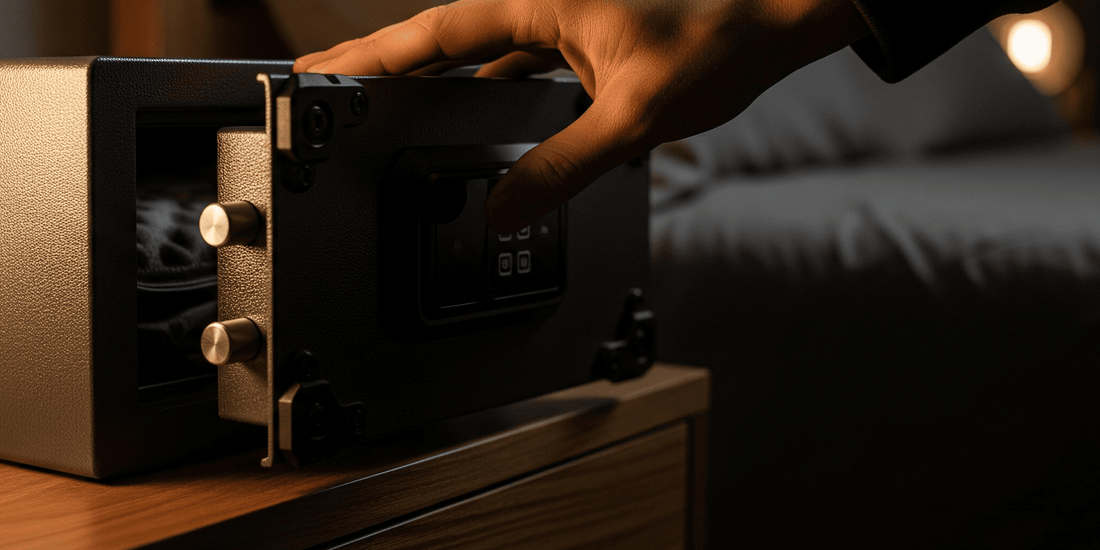
A biometric gun safe promises a fast open in the dark—and a lock that does nothing for you if the sensor or battery fails. Both halves matter when comparing models.
Updated for 2026, this guide replaces a simple ranking with a buying framework. A fast reader is still the wrong purchase if the box cannot clear your pistol's optic, cannot be anchored, or lacks a tested backup when your hands are cold or wet.
The Five Decisions Before You Buy
Physical fit and backup reliability come before extra features: a scanner you love on a box that cannot close over your handgun is an expensive paperweight.
| Order | Decision | Why It Comes Here |
|---|---|---|
| 1 | Sensor type | Sets daily access behavior and what finger conditions cause failed reads |
| 2 | Capacity & interior fit | Determines whether your firearms, optics, and magazines physically fit |
| 3 | Backup access | Defines the mechanical or secondary path when batteries or scans fail |
| 4 | Installation scenario | Matches weight, door swing, and anchoring to a nightstand, vehicle, or closet |
| 5 | Price tier & model pick | Comes last, because the right budget depends on decisions 1 through 4 |
Understanding Biometric Sensor Types
Consumer biometric gun safes use three main families of fingerprint readers. In daily storage, they differ less in raw unlocking speed than listings suggest, and more in how they handle dry skin, dust, moisture, or off-angle placement.
Optical Scanners — The Volume Standard
An optical reader uses an illuminated prism or coated glass window and a tiny camera to photograph your fingertip ridges. Manufactured at scale for decades, optical modules are common on entry-level and mid-range desktop units and tolerate slightly dry skin well when the window is clean.
Their primary weakness is surface sensitivity: smudges, gun oil, lotion, or dust on the glass scatter internal light and cause rejected scans, and standard optical sensors evaluate a flat two-dimensional image rather than a three-dimensional electrical profile.
Capacitive Scanners — The Common Modern Choice
Capacitive fingerprint sensors work like smartphone readers. Instead of light, an array of tiny semiconductor capacitor plates measures the electrical conductivity difference between dermal ridges touching the pad and the air valleys between them.
Capacitive sensors read clean fingers quickly, work identically in darkness or glare, and fit slim housings. Because they read a surface electrical signal, standing moisture, sweat, dirt, or deep winter skin cracks can interrupt reads, and component quality varies across price tiers.
Multi-Spectral and Advanced Liveness Detection
Higher-tier modules sometimes use multi-spectral imaging or active liveness detection, checking subsurface skin characteristics to confirm a live, warm finger is present rather than a surface print. This raises resistance to spoofing and helps when outer ridges are worn thin, though it adds cost. Liveness detection reduces spoofing risk, but it does not stop an unauthorized person whose print was mistakenly enrolled or someone carrying away an unanchored box.
What Actually Causes a Fingerprint Read to Fail
Most rejected scans trace back to skin condition or rushed enrollment rather than a faulty circuit board:
- Dry, cold, or wet fingertips: Winter air lowers skin conductivity; wet hands bridge capacitive plates.
- Flat-only enrollment: Scanning only the center of your finger while sitting up often fails when reaching from bed at an angle.
- Cuts, calluses, or residue: Blister tape, calluses, or oil on the sensor window shift ridge readings.
Enroll at least two fingers per hand at your natural reach angle, wipe the sensor with a dry microfiber cloth, and test your prints monthly.

How to Size a Biometric Gun Safe
Most returns with compact safes are sizing problems rather than electronics problems. Labels like "two-pistol capacity" typically assume two bare subcompact handguns placed flat with no spare magazines or lights attached.
Measure What You Actually Own and Pick a Capacity Tier
Lay your unloaded firearm and accessories on a flat surface and check three measurements:
- Total length and height with accessories: A full-size pistol with a red-dot optic, suppressor-height sights, or a weapon light requires far more diagonal and vertical clearance than a bare frame.
- Grip clearance: Leave space around the trigger guard and backstrap so you can establish a clean grip in the dark without snagging on the door lip.
- Magazines and valuables: Add the footprint of spare magazines, a flashlight, or documents stored alongside the firearm.
Compact handgun boxes suit one full-size pistol or two subcompacts on a nightstand or in a vehicle; mid-size boxes hold two to four handguns plus magazines on a closet shelf; large units hold long guns or multiple optics-ready pistols on a floor or cabinet.
Internal Dimensions Are the Number That Matters
Separate exterior dimensions (where the box fits) from interior dimensions (what fits inside). In the ONNAIS product library, Iron Pro Max provides the largest documented interior at 14.57 L × 9.45 W × 2.36 H inches (15.35 L × 11.81 W × 3.15 H in exterior), whereas Alloy SE is the most compact at 8.98 L × 7.67 W × 2.57 H inches interior (11.28 L × 7.87 W × 3.10 H in exterior). Iron SE offers 10.63 L × 6.69 W × 2.91 H inches interior (11.49 L × 9.17 W × 3.07 H in exterior), while interior dimensions for Iron Pro (11.49 D × 9.17 W × 3.07 H in exterior) are not listed in the referenced spec table. Single-unit gross weight scales from 4.89 lb (Alloy SE) and 5.86 lb (Iron SE) to 6.38 lb (Iron Pro) and 9.86 lb (Iron Pro Max). See our ultimate pistol safe buying guide for more on pistol-box form factors.
Room to Spare vs. Dead Weight
Aim for 25% to 30% open interior space and removable foam so you can add an optic later—while confirming your shelf or drawer slide can carry the loaded gross weight.
Backup Access: Why One Method Is Never Enough
The fingerprint reader is your fast path into a biometric safe, not your only path. Over years of ownership, batteries run low, hands get scraped or cold, and electronics can fault. Treating the fingerprint pad as one layer inside a multi-method access plan ensures a rejected scan is a two-second pivot rather than a lockout.
Public recall records reinforce why independent backup access and regular verification matter. On February 22, 2024, the U.S. Consumer Product Safety Commission (CPSC) issued Recall 24-127 covering about 60,000 Awesafe biometric gun safes after 71 reported incidents of the recalled gun safes being opened by unauthorized users when the biometric lock failed to secure the safe (no injuries were reported). CPSC instructed owners to stop using the biometric feature immediately, remove the batteries, and use only the key until receiving a replacement. The lesson for every buyer: verify that your biometric lock rejects unenrolled fingers out of the box, and maintain a backup opening method you have personally tested.
The Four Backup Categories and Their Failure Modes
- Mechanical Key: Universal non-electronic last resort when batteries are dead; slowest in the dark and fails only if lost or locked inside.
- Electronic Keypad (PIN): Reliable daily alternative and shared access for a second adult; moderate speed, but fails if batteries die or the code is forgotten.
- RFID Card, Fob, or Wristband: Fast tap-to-open alternative for callused, dry, or injured fingertips; fails if the token is misplaced or batteries die.
- External Emergency Power Port: Supplies temporary power via an external cable so your PIN or print works when internal cells die; fails only without a matching cable and power source nearby.

For a deeper look at daily behavior, read our guide to a biometric vs keypad gun safe.
Rules for a Backup You Can Actually Reach
- Test every backup on day one: Open the empty safe with the keypad, RFID token, mechanical key, and external power port before storing a firearm.
- Never store the mechanical key inside the safe: Keep backup keys in a separate secure location under adult control.
- Coordinate across authorized adults: Ensure each authorized adult has enrolled prints, knows the PIN from memory, and knows where the key is secured.
- Replace batteries proactively and stage a cable: Swap cells on a schedule and keep a matching power cable in a nearby drawer.
- Run a 60-second monthly test: With the firearm safely removed or verified unloaded per its manual, test two enrolled fingers, the PIN, any RFID token, and the mechanical key.
Representative Products: 2026 Examples
Rather than ranking one winner for every home, it helps to examine representative categories that illustrate different combinations of sensor approach, backup options, and body construction.
Multi-Spectral, App-Connected Category (Example: Vaultek VT-Series / Smart Bedside Class)
Models in the app-connected tier pair a fingerprint scanner with onboard keypad entry, mechanical backup keys, and smartphone app logging over Bluetooth or Wi-Fi. Buyers here prioritize event history logs, tamper alerts, and interior LED lighting for bedside or office drawers. The trade-off is a higher price point and extra app management that some owners skip in favor of local hardware control.
Compact Multi-Access Aluminum Category (Example: ONNAIS Alloy SE)
Within the ONNAIS portable line, ONNAIS Alloy SE represents the compact, lightweight tier built for nightstands, drawers, or portable storage where low mass matters. In the ONNAIS product library, Alloy SE measures 11.28 L × 7.87 W × 3.10 H inches exterior and 8.98 L × 7.67 W × 2.57 H inches interior, with a single-unit gross weight of 4.89 lb. Its slim footprint fits tight furniture spaces, while buyers storing multiple full-size handguns or large optics can step up to the wider Iron series.
Heavy-Gauge Steel, Keypad-Backed Category (Example: Liberty Safe HDX / Heavy Desktop Class)
At the heavy-duty desktop end, steel-heavy vaults emphasize thicker steel construction and mechanical or electronic keypad backup alongside an optical or semiconductor fingerprint reader. These suit buyers who plan to bolt a heavier container permanently to a closet shelf, floor stud, or reinforced dresser in exchange for a larger exterior footprint and heavier weight.
Representative Comparison Framework
| Model / Category Example | Primary Design Focus | Exterior Dimensions | Interior Dimensions | Gross Weight |
|---|---|---|---|---|
| Vaultek VT-Series Class | App logging + multi-mode bedside access | See manufacturer spec | See manufacturer spec | See manufacturer spec |
| ONNAIS Alloy SE | Compact portable footprint | 11.28 L × 7.87 W × 3.10 H in | 8.98 L × 7.67 W × 2.57 H in | 4.89 lb |
| ONNAIS Iron SE | Mid-size storage footprint | 11.49 L × 9.17 W × 3.07 H in | 10.63 L × 6.69 W × 2.91 H in | 5.86 lb |
| ONNAIS Iron Pro | Mid-size higher-mass frame | 11.49 D × 9.17 W × 3.07 H in | Not listed in referenced spec table | 6.38 lb |
| ONNAIS Iron Pro Max | Large multi-handgun / accessory fit | 15.35 L × 11.81 W × 3.15 H in | 14.57 L × 9.45 W × 2.36 H in | 9.86 lb |
| Liberty HDX Class | Heavy stationary mounting | See manufacturer spec | See manufacturer spec | See manufacturer spec |
Current functional specifications, certifications, and pricing are subject to each model's official product page.
ONNAIS Product Line: Capacity and Fit Comparison
The table below compiles the physical dimensions and single-unit gross weights documented in the ONNAIS product knowledge base so you can compare exterior footprint and interior clearance side by side.
The Four ONNAIS Storage Sizes Side by Side
| Model | Exterior Dimensions (Inches) | Interior Dimensions (Inches) | Gross Weight (lb) | Derived Volume (Approx. cu in)* |
|---|---|---|---|---|
| Alloy SE | 11.28 L × 7.87 W × 3.10 H | 8.98 L × 7.67 W × 2.57 H | 4.89 | ~177 cu in (derived) |
| Iron SE | 11.49 L × 9.17 W × 3.07 H | 10.63 L × 6.69 W × 2.91 H | 5.86 | ~207 cu in (derived) |
| Iron Pro | 11.49 D × 9.17 W × 3.07 H (product size) | Not listed in referenced spec table | 6.38 | Not available |
| Iron Pro Max | 15.35 L × 11.81 W × 3.15 H | 14.57 L × 9.45 W × 2.36 H | 9.86 | ~325 cu in (derived) |
\Dimension order (L/W/H or D/W/H) follows the original listing and represents published physical specifications rather than individual measurements; gross weight is not net weight. Derived volume is calculated mathematically from listed interior dimensions for rough comparison only. Current specifications and pricing are subject to each model's official page in our Gun Safes collection.*

Matching the Footprint and Anchoring Your Unit
- Alloy SE: 11.28 × 7.87 × 3.10 in exterior (8.98 × 7.67 × 2.57 in interior, 4.89 lb gross), sized for compact nightstand or drawer placement.
- Iron SE: 11.49 × 9.17 × 3.07 in exterior (10.63 × 6.69 × 2.91 in interior, 5.86 lb gross), adding interior length and height.
- Iron Pro: 11.49 D × 9.17 W × 3.07 H in exterior and 6.38 lb gross weight (interior dimensions not listed in the referenced spec table).
- Iron Pro Max: 15.35 × 11.81 × 3.15 in exterior (14.57 × 9.45 × 2.36 in interior, 9.86 lb gross), widest layout for multiple handguns and accessories.
Because any portable box between 4.89 lb and 9.86 lb can be carried off if left loose, anchor your safe to a wall stud, floor joist, heavy furniture frame, or structural vehicle bracket, and confirm your shelf or drawer slide is rated for the loaded weight.
Installation Scenarios: Bedside, Vehicle, Closet
The same biometric safe can be ideal in one location and a mistake in another. Decide where the safe will live—and how you will anchor it—before picking a model.
Bedside — One-Handed Reach and Clear Lid Swing
At the bedside, your priority is opening the safe smoothly in the dark without sitting up:
- Run a blind reach test: Confirm your hand lands naturally on the sensor pad from your sleeping position.
- Prioritize tactile access: Fingerprint pads, raised backlit keys, or RFID tokens reduce fumbling when waking up groggy.
- Check lid clearance and sightlines: Measure open lid height so it does not strike a shelf or lamp, and angle the box away from bedroom windows and doorway views.
Vehicle — Anchoring Outranks Access Speed
An unanchored safe under a seat is just a carrying case for a thief. In a vehicle, retention and environmental durability come first:
- Anchor to structural steel: Bolt the housing or loop a rated security cable around a steel seat frame or cargo tie-down—never removable plastic trim.
- Account for heat, cold, and vibration: Cabin heat and winter freezes stress batteries and affect capacitive reads; test your mechanical backup key regularly and remove batteries if advised for extreme temperatures.
- Keep expectations realistic: A vehicle lockbox deters an opportunistic grab and secures firearms around passengers; it will not stop power tools given uninterrupted time.
Closet or Cabinet — Capacity, Weight, and Lease Rules
Closets accommodate wider footprints (such as the 15.35 × 11.81 inch exterior of Iron Pro Max) out of daily sight. Bolt into wall studs or floor framing rather than thin particleboard shelves, and store the mechanical backup key in a separate room. If you rent, see our guide to gun safes in apartments for non-destructive anchoring options and lease tips.
How to Read a Biometric Safe's Claims
Marketing pages across the gun-safe industry rely on dramatic adjectives and lab benchmarks. Knowing how to translate those claims helps you compare any listing objectively.
Claims to Discount or Verify Carefully
- "Opens in 0.3 seconds": Ask whether that is timed from finger contact or processor wake-up, and test with cold or dry hands.
- "False rejection rate (FRR) under 0.5%": Typically reflects controlled lab trials on freshly enrolled clean fingers, not year-round household use.
- "Military grade" or "tactical steel": Neither is a recognized security certification; look for stated material type and steel gauge instead.
- "Waterproof" vs. "water-resistant": Cable holes, mounting holes, and battery trays make most electronic safes unsuitable for submersion.
Specifications Worth Asking For Before Checkout
- Named certification: If a listing claims UL 1037 or state DOJ compliance, verify the exact model on the certifying agency's roster.
- Battery type and low-voltage alert: Check the cell type and how the lock warns you before power drops.
- Fingerprint template capacity: Confirm how many prints can be enrolled for a multi-adult home.
- Power-off backup: Verify that the mechanical key and emergency power port work when internal batteries are removed.
- Downloadable manual: Check that enrollment, reset, and mounting instructions are available before buying.
Run a Quick CPSC Recall Check
Before buying any biometric safe, search the brand and model on CPSC.gov/Recalls. In CPSC Recall 24-127 (February 22, 2024, covering about 60,000 Awesafe biometric gun safes after 71 incidents of unauthorized opening when the biometric lock failed to secure the safe, with no injuries reported), defective readers opened for unenrolled fingers. Checking recalls and testing your unit with an unenrolled finger takes two minutes.
FAQs
1. Is a fingerprint gun safe safer than a keypad gun safe?
Neither is automatically safer in every home. A fingerprint reader eliminates shoulder-surfing and shared PINs, while a keypad keeps working when fingertips are cut, wet, or bandaged. Many owners choose a safe that combines both; see our biometric vs keypad gun safe guide.
2. Can someone spoof or bypass a fingerprint gun safe?
Spoofing a modern sensor is harder than television suggests, but physical theft and bad enrollment remain real risks. No compact safe stops someone who can carry off an unanchored box or open a unit left in factory mode. Test with an unenrolled finger and anchor the safe.
3. How many fingerprints should I enroll on a biometric safe?
Enroll at least two fingers per hand for each authorized adult across slight angle variations, and check the model's manual for total template capacity.
4. Do biometric gun safes need batteries, and what happens when they die?
Yes. When internal batteries run down, enrolled prints and PINs stay in memory, and you can open the safe with the mechanical backup key or via the exterior emergency power port.
5. Is it better to spend budget on a larger safe or a more advanced sensor?
Decide interior fit and backup access first. A premium sensor on a box that cannot close over your pistol's optic is unusable, whereas a properly sized safe with a tested keypad and mechanical key backup will serve you for years.
6. Where is the best place to mount a biometric gun safe?
Mount it at the bedside if one-handed nighttime reach comes first, bolted inside a closet if you need a larger footprint like Iron Pro Max out of sight, or tethered to a structural seat frame for temporary vehicle storage.
The Bottom Line
- Match fit and sensor first: Measure your firearms with optics and magazines attached, compare against verified interior dimensions (such as Alloy SE at 8.98 × 7.67 × 2.57 in up to Iron Pro Max at 14.57 × 9.45 × 2.36 in), and enroll multiple fingers across natural reach angles.
- Anchor the box and test backups monthly: Bolt the unit (4.89 lb to 9.86 lb across the ONNAIS portable line) to a solid structure and test your keypad, RFID, and mechanical key every month.
- Check live specifications: Current specifications and pricing are subject to each model's official page in our Gun Safes collection. Pair your safe with our safe firearm storage at home checklist to keep household storage discipline consistent.


